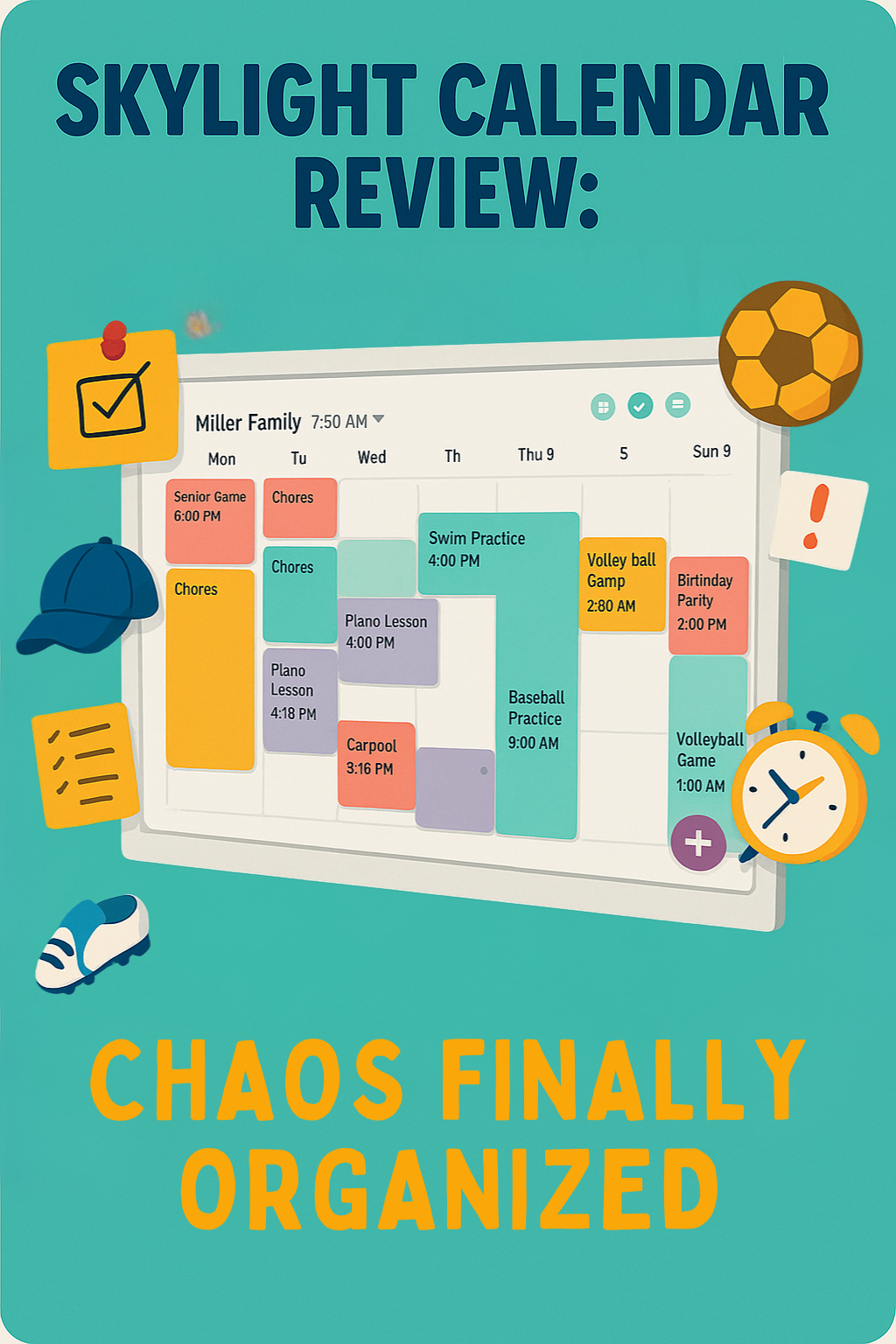
The Skylight Calendar entered my life on a morning so chaotic it felt like the universe was running a stress test on my soul. It was one of those tournament Saturdays that look normal on the calendar but unfold like a documentary about parental survival. The car smelled like adrenaline and half-finished breakfasts. Someone forgot cleats. Someone else forgot deodorant. The only available meal was a stale granola bar that had been riding under a seat since last season. One kid wore the wrong uniform entirely. The other blamed me for ruining their future in sports. And at the exact same moment, three group chats erupted with breaking news about field changes, time swaps, and parking instructions that might as well have been written in hieroglyphics.
There comes a point in every sports parent’s life where you stop thinking, “We’re just having a busy day,” and start thinking, “This is how civilizations collapse.” That was my point.
Time lost all meaning. I no longer knew if we were early, late, or simply orbiting real life from a distance. I just knew the current system was broken. Every tool we were using was failing. The team app no one checked was failing. The fridge calendar everyone pretended to read was failing. The group chats were delivering messages faster than my brain could process them. And the mental load was becoming a full-time emotional weight training program.
Something had to change. We needed one place. One screen. One source of truth that did not rely on memory, luck, or a string of desperate reminders taped to the fridge.
That is when the Skylight Calendar showed up and everything shifted. A clean, bright, wall-mounted display that takes all the chaos, swallows it whole, and spits out a schedule that finally makes sense. It tells everyone where they need to be. It tells them when they need to be there. It tells them which uniform they should be wearing so you no longer have to play detective at 6 a.m. It does the one thing every sports family secretly dreams of: it makes the week feel manageable.
This review is for every parent who has ever eaten dinner in the car with the interior light on. For every family who has reached the field at the wrong time. For every adult who has sprinted through a parking lot holding two water bottles, a folding chair, a spirit towel, and a sense of mild despair. I am going to walk you through exactly how the Skylight Calendar works inside a real sports household. How it reduces the chaos. How it restores clarity. Where it shines. And the tiny places where it still makes you mutter under your breath.
Because if you are raising young athletes, the Skylight Calendar is not just another gadget. It is a lifeline disguised as a screen on the wall. And once you have it, you will wonder how you ever survived without it.
What Is the Skylight Calendar? Parent Terms Only
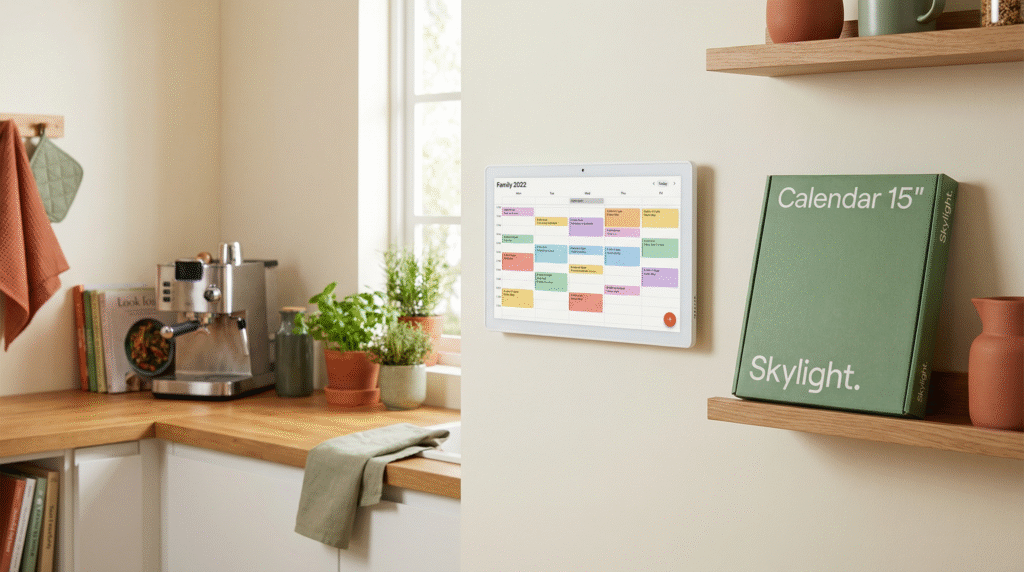
The Basics in Normal Human Language
The Skylight Calendar is a fifteen inch wall mounted touchscreen that finally gives your home a central brain. It pulls your family calendar, your to do list, chores, reminders, and every moving part of your life into one giant screen everyone can actually see.
Think of it as the opposite of the scraps of paper taped to the fridge, the mystery notes on your phone, and the screenshots you swore you would remember but absolutely did not. This is the grown up version. The upgrade. The sanity saver.
Families usually put it somewhere no one can ignore.
The kitchen.
The hallway.
The command center.
The place where kids wander like confused NPCs asking “What time do we leave” seventeen times a day.
With the Skylight Calendar, you just point at the wall. It is clear. It is visible. It does not require detective work or psychic ability. It simply tells your family where to be and when.
Why Sports Families Are Obsessed with It
Sports families do not run on schedules. They run on organized chaos.
If you know, you know.
You have multiple kids on multiple teams who all somehow practice at different times but always on the same day. You have games in cities you have never heard of. You have carpools that change thirty minutes before you leave the house. You have school events, birthday parties, orthodontist appointments, trainer sessions, tryouts, and the sacred weekly ritual of hunting for that one missing water bottle that vanished into the void.
Sports families live in a world where everything is happening at the same time and every plan can change in a single group chat message.
The Skylight Calendar solves the one thing nothing else ever has:
It creates one shared truth that everyone in the house has to accept.
Practice time. Game time. Uniform color. Field name. Appointment reminders.
If it is on the wall, it is law.
No more “I did not see it.”
No more “When did that get added” arguments.
No more pretending the app notifications never happened.
The big glowing rectangle told you. Case closed.
Coach Pigeon Sidebar: The Old Way vs The Skylight Way
Old way:
You flip between a crumpled paper schedule, twenty screenshots you forgot to organize, a dry erase board from 2017 that still says “Picture Day,” and a group chat that sends updates like a weather emergency alert system.
New way:
“Sammy, look at the big glowing rectangle on the wall. It literally says practice at five. Not four. Not six. Not ‘I thought we were off today.’ Five.”
Design, Setup, and First Impressions
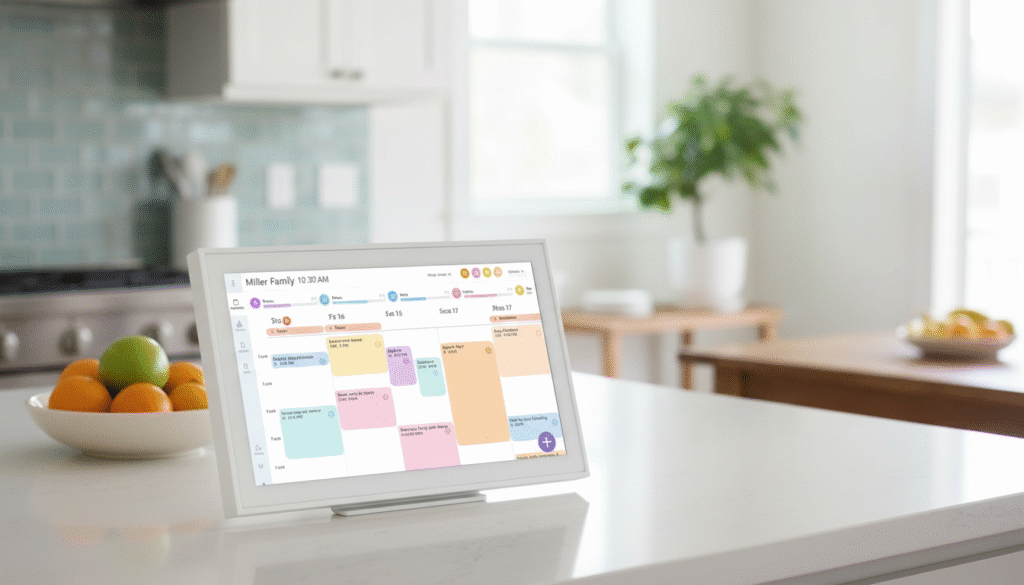
Unboxing and First Reaction
Opening the Skylight Calendar feels strangely hopeful, like maybe this is the moment your house finally stops operating in a state of constant emergency. The calendar comes out of the box looking far more polished than anything meant for a household where cleats tumble across the floor and backpacks explode daily. The screen is a bright fifteen inch display that immediately looks more put together than anything else in the room. Even when it is turned off, it has a clean, modern presence. When you power it on, the brightness has the same effect as opening curtains on a messy room. Suddenly everything feels a little more possible.
Your family reacts the way families always do when something new appears on the wall. Your spouse tries to play it cool but you can see the quiet curiosity. Your kids hover nearby with that suspicious look children get when introduced to anything that requires responsibility. You stand back for a moment and realize it already makes the space feel more intentional, almost as if the house finally has a headquarters instead of a collection of scattered islands.
Once it is hanging, the atmosphere in the room changes. It naturally becomes the focal point, the place your eyes move to without thinking, the object that makes you imagine what life might be like if everyone actually knew the plan before the car was running.
Setup Process in Real Life
The setup is refreshingly normal, which feels like a miracle if you have ever registered for a sports season, logged into a school portal, or attempted to reset a password you have forgotten five times. You plug it in. It comes to life instantly. You choose the WiFi. You sign in with the calendar you already use, whether that is Google, Apple, Outlook, or whichever system your family pretends to check.
The moment you connect your calendar, the screen fills with your real life. Practices, games, appointments, reminders, all arranged in a clear and readable way that makes you wonder why you ever tolerated anything else. The entire setup takes only a few minutes. You can do it while finishing cold coffee, locating a lost shin guard, and reminding a child that yes, socks are required today.
Nothing about the process feels intimidating. It feels like the product was designed for people who spend their lives trying to remember fifteen moving parts at once.
Mounting It in the Family Command Center
Where the calendar lives matters more than you expect. Place it somewhere your family naturally moves through, the spot where the day transitions from calm to chaos and then back to calm again. Most households put it in the kitchen because that is where everyone passes through on the way to school, sports, or whatever activity the group chat tried to warn you about. Others choose the hallway near the garage, the path that catches every kid as they grab their bag and sprint outside.
Once it is up, you start to see the difference immediately. People glance at it without being asked. Morning confusion fades. After school chaos becomes less dramatic. The calendar becomes part of the rhythm of the house, like a quiet guide reminding everyone what needs to happen next.
It does not just display the schedule. It changes how the household moves.
Coach Pigeon Sidebar: Tech Fear vs Reality
If you can survive tournament registration on eight different websites with passwords you definitely forgot, you can set up this calendar.
Core Features That Actually Matter to Sports Families
Daily and Weekly Views That Stop Double Booking
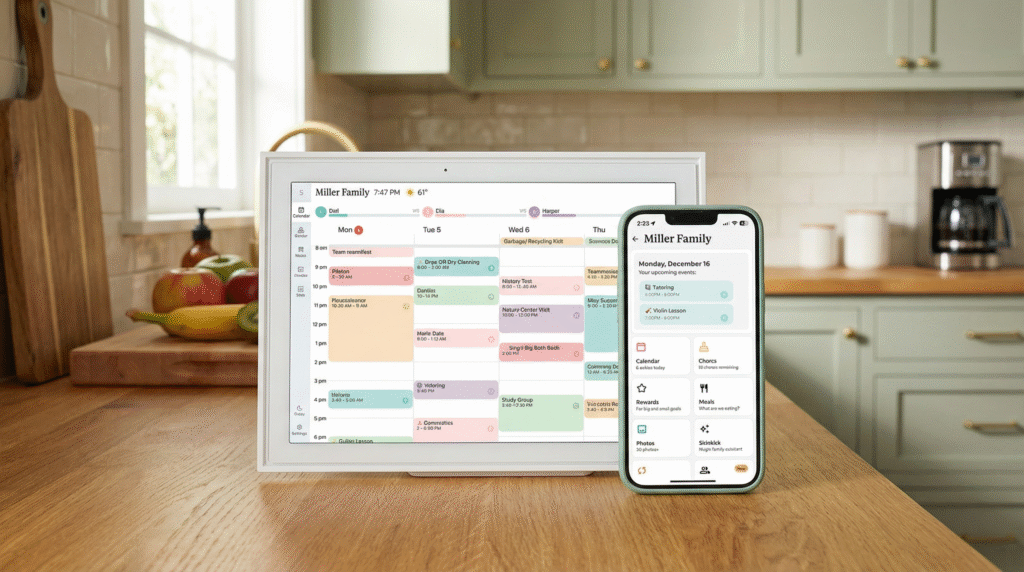
Every sports parent knows there is a moment each morning when you stare at the day and wonder if time is even real. The Skylight Calendar fixes that. The daily view breaks everything into a clean, uncomplicated timeline that makes even the busiest weekday feel possible. Suddenly you can see exactly how practice fits around tutoring, dinner, and the mysterious one hour block your child swears they need for something that sounds made up.
The weekly view is where it becomes a life saver. Tournament weekends are basically organized mayhem, especially when you have multiple kids bouncing between fields like caffeinated pinballs. Instead of hunting through apps and screenshots, the whole week sits right in front of you in bright, readable blocks. Soccer in blue. Lacrosse in red. School events in green. That one activity your kid begged for and now regrets in yellow. One look and you actually feel in control, which is not something most sports parents get to experience very often.
Calendar Sync and Shared Schedules
The Skylight Calendar syncs like it understands your soul is tired. You add an event to your phone and it appears on the wall without any effort. It feels almost suspiciously smooth. Google, Apple, Outlook, it does not matter. Everything merges into one central schedule you can trust more than anything your family says out loud.
This becomes priceless when you are co parenting or juggling multiple households. Everyone sees the exact same plan without needing constant reminders or clarifications. If grandparents help with rides, they just glance at the wall and instantly know the game time. There is something deeply calming about not having to dig through six chats and three emails just to confirm when to leave the house.
Reminders and Alerts That Save Your Butt
The reminders are what truly save lives. Not dramatic lives, but the fragile sanity of parents who already operate one crisis away from tears. The calendar gently nudges you when it is time to leave for a game. It reminds you of equipment checks so no one shows up with only one cleat again. It flags uniform colors so you do not send your kid to an away game wearing home colors like a rookie. And it catches snack duty before it blindsides you on a morning when you already woke up behind schedule.
Something surprising happens after a few weeks. Kids start checking the screen themselves. They see the reminders. They adjust. They prepare. They take responsibility in a way that feels miraculous. It is the quiet beginning of teaching time management, disguised as a glowing rectangle everyone walks past anyway.
Chores, Tasks, and the Rest of Non Sports Life
A sports family never stops moving, but life is more than practices and games. The Skylight Calendar gives equal weight to the things that exist outside cleats and whistles. Homework blocks sit alongside training sessions. Chore reminders sit next to game days. Laundry nights appear where they belong. Even the dreaded clean the gear bag before it becomes a biohazard task gets its own dignity on the screen.
Kids get to check off tasks with a simple tap. They get to see the invisible work behind keeping the house functioning. It gives them ownership in a way that makes the household feel like a team instead of a group of people yelling “Did you finish that” across the hallway.
Coach Pigeon Game Plan Callout
Coach Pigeon steps in with a short strategy board called the Coach Pigeon Game Plan. It lays out a week the way real sports families live it. Three practices spaced out so no one implodes. One game anchoring the weekend. A training session tucked in after school. Homework time slotted before screens. A chore block to prevent the house from falling into chaos. And one sacred family night carved out intentionally so the schedule does not swallow your entire life.
It is a reminder that when the plan is visible and honest, the week feels less like survival and more like something you can actually enjoy.
The Real Life Test – How the Skylight Calendar Changed Our Sports Week

Before Skylight: Constant Scrambling
Before the Skylight Calendar entered our lives, our weeks felt like a competitive sport with no referee and no rulebook. Every day brought some new scheduling disaster we absolutely should have anticipated but somehow did not. An email from the coach would slip past us during a moment when someone spilled juice or yelled from upstairs about a missing sock. The wrong jersey color became a weekly tradition. We once rolled into the wrong field entirely and spent the first five minutes pretending it was the GPS’s fault even though we both knew it was definitely ours. And nothing could match the look on a child’s face when you walk in late, both of you acting like it was totally fine while silently panicking inside.
It was not that we were careless. We simply had a schedule being delivered across too many apps, too many chats, too many channels, and too many people talking at once. It was like trying to juggle flaming swords while someone shouted instructions in another language.
After Skylight: What Actually Changed
The first week with the Skylight Calendar felt like someone finally switched our life out of hard mode. The schedule did not live in messages or memory anymore. It lived on the wall. It was public. It was undeniable. There was something magical about walking into the kitchen and seeing the entire day laid out like a game plan from an organized universe we had never met.
Arguments in the car dropped immediately. No one needed to debate who forgot what because the truth was already displayed in glowing letters. Instead of shouting questions from across the house, the kids wandered over to the screen, tapped it gently, and discovered the answers themselves. For the first time in a long time, the phrase “Wait, that was today” practically disappeared from our vocabulary.
It felt like we finally outran the chaos instead of always trailing behind it.
Impact on the Kids
Watching the kids interact with the calendar became its own unexpected joy. They walked past it and actually paused. They looked. They processed. They asked fewer panicked questions. They began to understand time in a real world way. They learned to gauge how long they needed to get ready. They packed their own equipment when the reminder popped up. They even started noticing conflicts before we did and would say things like “My practice overlaps with her piano lesson, we should fix that.”
It was not some dramatic transformation. It was a steady shift. A quiet build of confidence and responsibility. The kind of growth parents usually pray for but rarely see so clearly.
Impact on the Parents and the Mental Load
For us, the change was almost emotional. The mental load that parents carry is invisible until it finally gets lifted. Suddenly I was not storing every appointment, practice, field change, and school event inside my brain like a cracked hard drive. The information lived somewhere real. Somewhere visible. Somewhere everyone could access. I could breathe.
Sunday nights were different too. Instead of reconstructing the week from screenshots, group chats, forwarded emails, and vague memories, we walked over to the wall and saw everything at once. The entire week in one view. It was the difference between stumbling through the dark and finally flipping on the lights.
Coach Pigeon Storytime
What sealed it for me was a moment late in that first week. A family member walked into the kitchen, stood directly in front of the calendar, stared at its enormous glowing display showing every important event in crystal clear detail, paused for a good five seconds, and then said the most predictable sentence in the history of sports families.
“What time is the game again”
If Coach Pigeon had been real, he would have dropped his imaginary clipboard and walked straight out of the room.
The schedule was right there. In full color. In giant letters. Glowing like a lighthouse for lost parents everywhere. Yet somehow, the question still came. That moment told me everything I needed to know. The calendar worked. The people just had to keep up.
And honestly, that is the beauty of it. The Skylight Calendar does not fix human nature. It simply makes the chaos visible enough for the rest of us to finally survive it.
Sports Specific Use Cases That Make the Skylight Calendar Worth It
Tournament Weekends and Travel Chaos
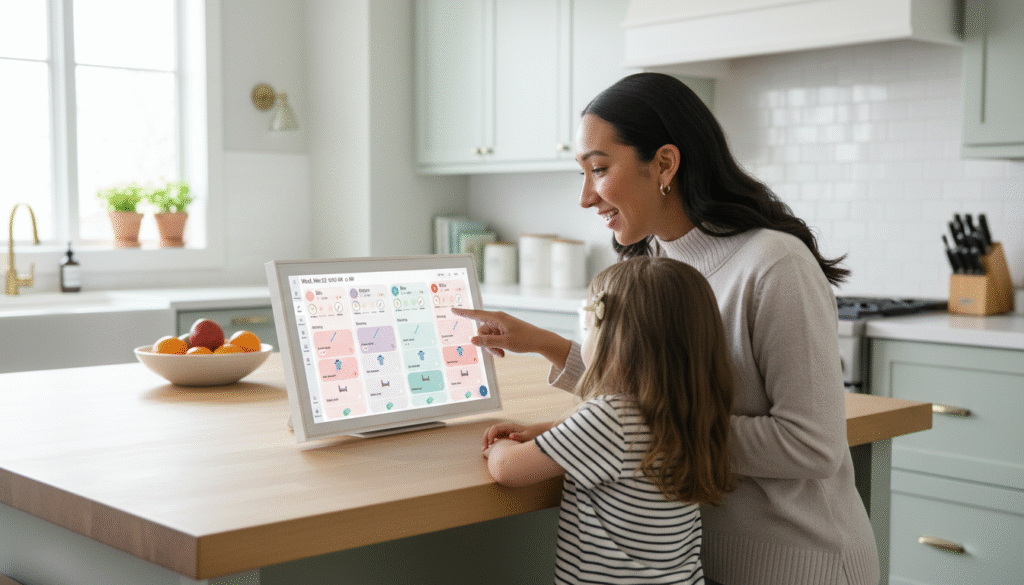
Every parent who has survived a tournament weekend knows it is not really a weekend. It is a logistical endurance challenge disguised as youth sports. You pack the car like you are embarking on a cross country expedition. You leave the driveway both too early and somehow still too late. Game times shift. Field assignments move. Your hotel confirmation lives somewhere in an email you definitely flagged but now cannot find. And no matter how prepared you think you are, you still end up eating concession stand nachos at nine thirty in the morning.
Then the Skylight Calendar enters the picture. Suddenly the entire weekend unfolds on the wall like a mission briefing from a very organized general. Game times line up cleanly instead of floating around your brain like loose confetti. Field locations sit right next to them, and for the first time in your life you actually know where Field Seven North is before arriving. Hotel check in and check out sit on the same timeline so you do not accidentally vacate a room at the worst possible moment. Even meal breaks get a designated place so you are not force feeding granola bars to people who clearly need real food.
The weekend becomes navigable. Not easy. Never easy. But manageable in a way that feels almost luxurious.
Multi Sport Kids in Overlapping Seasons
There is a special kind of chaos reserved for families with kids in overlapping sports. It is the kind of chaos that makes you question whether time is a flat circle. Soccer bleeds into hockey. Hockey overlaps lacrosse. Basketball sneaks up on you like a jump scare. Private lessons pop up out of nowhere. Clinics multiply like rabbits. And every day you swear you are forgetting something important because statistically you probably are.
The Skylight Calendar turns that madness into something you can read without sweating. Each sport appears in its own color so the week no longer looks like a multicolored battlefield of unknown commitments. You walk by the screen and instantly know who has what. You can see where things collide. You see potential disasters before they occur. You can tell which child needs to be in which zip code without flipping between apps or praying you remember the right uniform.
It brings a clarity that feels almost magical.
Carpool Schedules and Shared Responsibilities
Carpooling is the silent backbone of youth sports. Without it, most families would collapse under the sheer math of conflicting schedules. But carpool plans change constantly. Someone’s meeting runs late. Someone’s kid gets sick. Someone forgets they agreed to drive and claims the message never arrived. Suddenly you are driving across town wondering how you became everyone’s default backup driver.
The Skylight Calendar smooths this chaos beautifully. Driving days show up right on the screen. Pickup windows sit exactly where they belong. Drop off times sit next to them. There is no guessing. No frantic texting. No last minute panic when someone realizes they were supposed to be in the car ten minutes ago.
It feels like the first time the entire household is speaking the same scheduling language.
Off Season Training and Rest Days
The off season is where athletes grow, but it is also where families accidentally turn into unpaid personal trainers. It is easy to either overschedule training or forget it altogether because the mental load of remembering everything is already too heavy.
When off season work is on the Skylight Calendar, it becomes balanced by design. Training sessions live on the screen where you can see them clearly. Strength workouts sit next to school responsibilities so nothing gets overwhelming. Rest days become intentional instead of accidental. Recovery habits like stretching and PT exercises show up in plain sight so they actually happen instead of becoming things you swear you will remember later.
The calendar turns ambition into a plan instead of chaos.
Coach Pigeon Over Scheduled Alert
There is always that moment when you walk by the calendar and realize it has transformed into a modern art masterpiece. Colors everywhere. Stacked blocks. A schedule so dense you need a deep breath before processing it.
That is when Coach Pigeon appears in spirit, feathers ruffled, blowing his imaginary whistle and pointing at the wall with dramatic urgency.
If the screen looks like a Jackson Pollock painting, it might be time to eliminate something. Kids cannot thrive on permanent motion. They need free time. They need rest. They need boredom. They need hours where nothing is scheduled so they can breathe and be human.
The Skylight Calendar does not just show you the plan. It shows you when the plan has gone too far.
Beyond Sports – Appointments, School, Chores, and Real Life
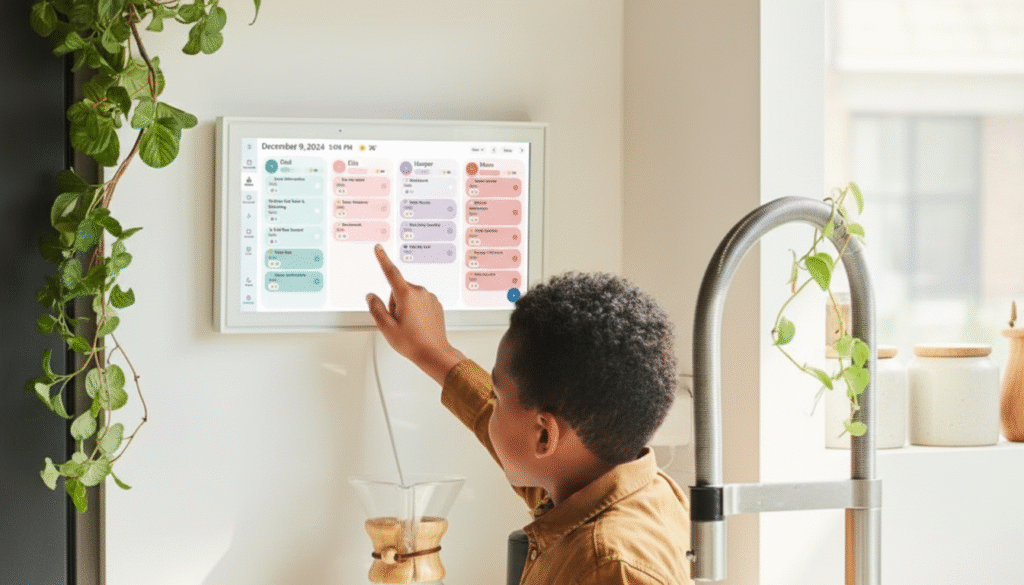
The moment you add real life to the Skylight Calendar, you understand its full power. Doctor visits, dentist appointments, therapy sessions, and school physicals finally sit on the same screen as practices and games, which means you never again layer a two hour orthodontist appointment directly over a scrimmage. Everything becomes visible at once, and suddenly your week stops ambushing you.
School projects and test weeks blend into the calendar naturally. Long term assignments no longer sneak up the night before. Kids can see everything coming instead of only reacting to whatever crisis arrives that day. It builds real awareness without you having to repeat yourself endlessly.
Even the household load becomes lighter. Someone takes out the trash. Someone washes water bottles. Someone finally cleans the gear bag before it evolves into its own species. Kids tap tasks off the screen, and there is something strangely motivating about seeing their name displayed like part of a lineup.
Meal planning becomes more realistic too. Taco night lands where it fits. Crockpot nights fall where you actually have time. The Skyline Calendar helps you see which nights you should cook and which nights are already drive through nights in disguise.
Coach Pigeon steps in with a gentle reminder that this thing is not just a sports survival tool. It is a family sanity anchor. And if you need to schedule a date night or a solo coffee on it to make it feel official, go right ahead.
Usability and Everyday Experience
The Skylight Calendar is instantly easy to read. You can see it clearly from across the kitchen while packing lunches or yelling “Shoes on” for the fourth time. Kids read it effortlessly, which means fewer questions, fewer misunderstandings, and far fewer last minute panics.
The touchscreen feels smooth and responsive without being delicate. Kids tap it harder than any engineer intended, yet it holds up. Adding events or scrolling through the week feels intuitive and comfortable even for non techy adults.
Customization gives the calendar personality. Colors, photos, layouts, and formats help you shape it into something your family will actually use instead of something that blends into the background. Sports families especially benefit from color coding and dedicated kid views.
The learning curve is gentle enough that grandparents and babysitters can glance at it and immediately understand the schedule. No tutorials. No guesswork. No stress.
Coach Pigeon jumps in with a quick laugh about the one parent who always forgets to add events or somehow deletes things by accident, yet the system still keeps the house from imploding.
Pros, Cons, and Who the Skylight Calendar Is Really For
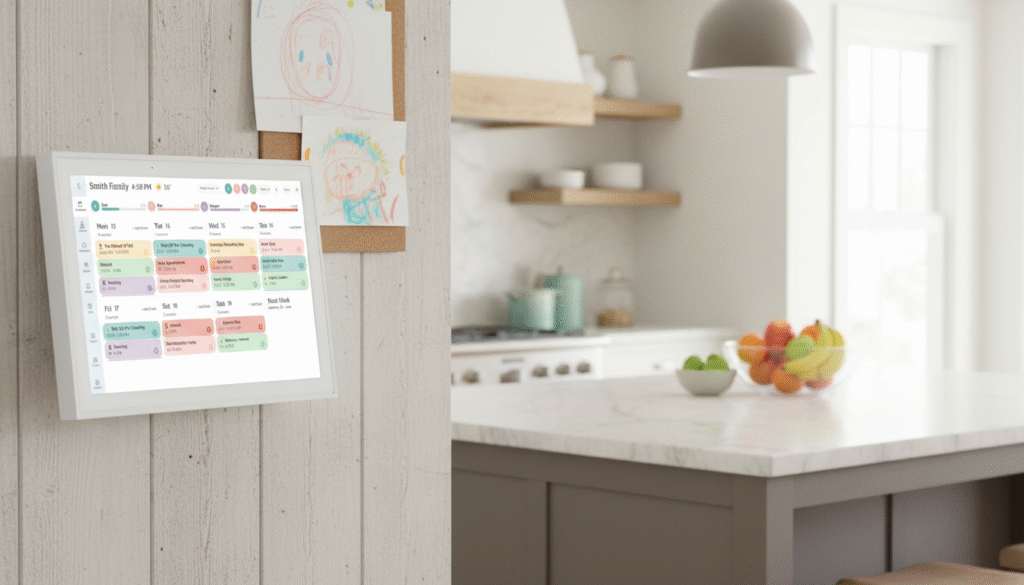
Sports families get the biggest win. Everything lives in one place, kids become more accountable, and co parenting or blended households finally share the same schedule without constant reminders or confusion. The calendar becomes a central command post everyone depends on.
The downsides are honest but minor. The price feels like a splurge at first. It depends on WiFi and synced calendars. And it cannot fix a parent who refuses to check anything no matter how many glowing screens you hang on the wall.
This device is perfect for families with multiple kids, overlapping sports seasons, two working parents, complex carpools, or shared custody routines. It gives order to lives that do not have the luxury of simple schedules. Families with one sport or parents who truly love their paper planners may not feel the same level of transformation.
Coach Pigeon steps in with a quick verdict. If your kid plays on more than one team and you still refuse to centralize your schedule, that is not a personality trait. That is a cry for help. Get the calendar.
Final Verdict – Is the Skylight Calendar Worth It for Your Sports Family
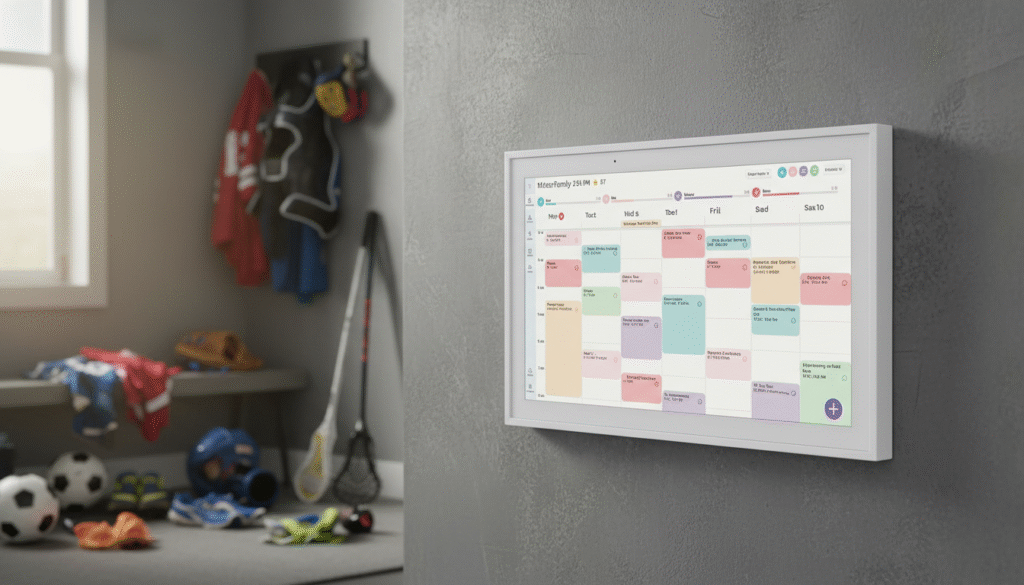
The difference between before and after is not subtle. Before felt reactive. After feels stable. The Skylight Calendar does not eliminate chaos, but it organizes it in a way that makes everything feel achievable.
Value becomes obvious once you compare it to everything you already spend money on for sports. Tournament weekends, new gear, private lessons, and team fees all cost more. This calendar gives something those things never will: a calmer, more predictable family rhythm.
The emotional payoff is the true win. Fewer frantic mornings. Fewer forgotten assignments and missed practices. More breathing room. More confidence. You stop feeling like the overloaded equipment manager and start feeling like the coach of the household again.
The recommendation is simple and honest. If your family spends its life on the sideline, the Skylight Calendar is not a luxury. It is a starter on your roster.
Coach Pigeon closes with a final pep talk. Hang it. Sync it. And make everyone look at it each morning like it is the national anthem. If you want fewer meltdowns, this is where the fix begins.
Read Next – Your Sideline Survival Guide Continues
After organizing your sports life with the Skylight Calendar, keep the momentum going with these reader favorites from Sideline Legends.
Sideline Snacks That Earn You Legend Status
A hilarious, practical guide to snack-table domination. From smart fuel to crowd-pleasers, this one turns you into the parent everyone silently worships.
15 Best Sports Gifts for Kids: Gear They Will Actually Use All Year
No junk. No clutter. Just real, parent-approved gear that helps your young athlete train harder, play better, and stay motivated.
Stop Yelling From the Sideline and Watch Your Kid Level Up
The article every sports parent secretly needs. The science, psychology, and humor behind why calm parents make better athletes.
11 Best Gifts for Sports Moms They Will Actually Use
No cliché mugs or dusty candles. These are the real-deal, game-day, sanity-saving gifts sports moms will love, use, and appreciate.
Skylight Calendar FAQ – Everything Sports Parents Need to Know Before Buying
Does the Skylight Calendar really make a difference for busy sports families?
Yes. The difference is immediate and obvious. Instead of juggling practice times, appointments, field changes, and school life across multiple apps and frantic group chats, everything lives in one place the whole family can see. Parents stop guessing. Kids stop asking. Chaos becomes predictable instead of overwhelming.
How difficult is the setup? Will I need to call the techy cousin in my family?
Setup is surprisingly simple. Plug it in, connect to WiFi, sign in to your calendar of choice, and you are done. If you can register your kid for a tournament on three different websites without crying, you can set this up without help.
Can my kids actually use it on their own?
Completely. Kids learn to tap, check schedules, and read reminders faster than adults do. They start taking ownership of their time, packing their gear earlier, and showing up more prepared. It teaches responsibility without you having to constantly remind them.
Does it work for families with shared custody or co parenting schedules?
Yes, and it is a game changer. Since events sync automatically from connected calendars, everyone sees the same plan without miscommunication. No more “Oh, I thought you had drop off today” or digging through messages to figure out schedules.
What happens if the WiFi goes out or someone forgets to update the calendar?
If your WiFi drops for a moment, the existing schedule still displays. New events simply wait to sync. And if someone forgets to add an event, the whole family will know who the culprit is because the calendar makes it clear what is and is not there. It reduces mistakes but cannot fix a parent who refuses to check anything ever.
Is the Skylight Calendar really worth the price?
For sports families juggling multiple kids, overlapping seasons, and constant movement, yes. It costs less than a tournament weekend, a new pair of skates, or a single private lesson. And the payoff is enormous. Fewer arguments, fewer surprises, calmer mornings, and a predictable rhythm the whole house benefits from.