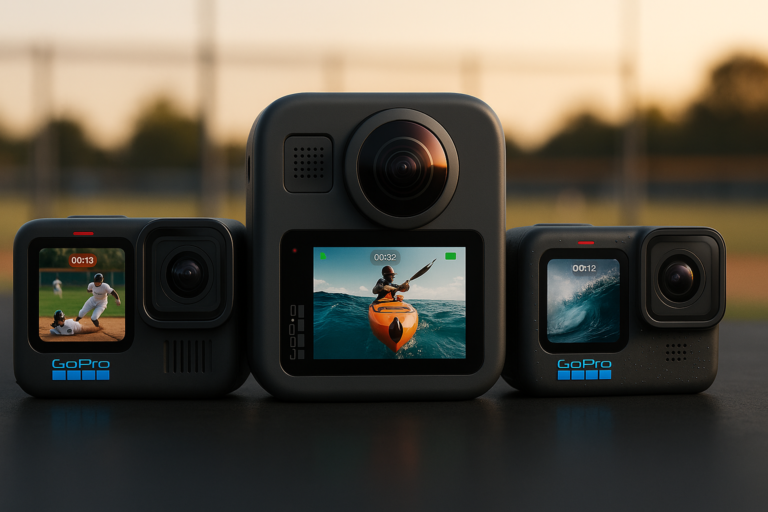

Forget the scoreboard. Social media in youth sports is the new final buzzer.
Once upon a time, the game ended when the whistle blew.
Now it ends when your kid finishes editing their highlight reel to Drake. Slow motion. Captions. A soundtrack so dramatic it makes a middle school scrimmage feel like the Super Bowl.
Welcome to the Highlight Reel Generation, where twelve year olds have production teams, parents develop early onset carpal tunnel from filming in freezing wind, and the line between athlete and influencer gets blurrier every weekend.
If you have ever whispered “please God, don’t let me drop my phone mid save” while recording in sideways rain with a coffee in one hand, a folding chair in the other, and your phone clutched like it holds your kid’s scholarship, congratulations. You are part of the content crew.
This is not just youth sports anymore.
This is show business on turf, and you are the unpaid production team.
📱 The New Sideline Job Nobody Asked For
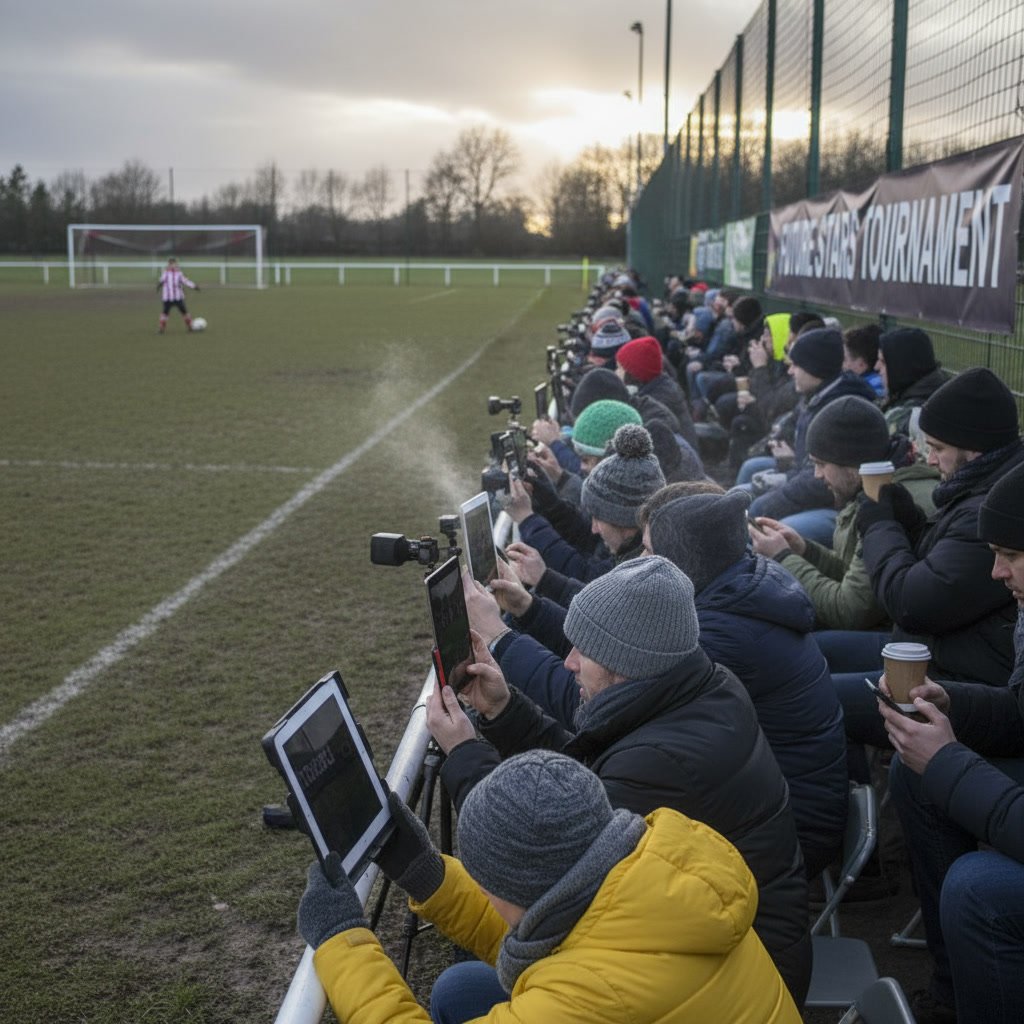
Let’s be honest.
We are not parents anymore.
We are unpaid camera crews with caffeine addictions and emotional support chairs.
Every Saturday feels like a full scale media shoot.
We film, tag, caption, edit, and pretend we understand lighting while juggling coffee, folding chairs, and what is left of our sanity.
This is what social media in youth sports has done.
It turned game day into production day.
There is always that one dad with a gimbal moving like he is directing a nature documentary about his kid’s corner kicks.
Then there is the mom with a ring light on the sideline smiling like she is about to launch her child’s skincare brand between plays.
You want to laugh, but you also kind of respect the commitment.
Scroll through any team’s feed and it is obvious. Social media in youth sports is not just about highlights anymore. It is about hashtags, views, and who captured the best angle of a ten year old’s assist.
At some point youth sports became the Influencer Games.
The parents became the producers.
The kids became the content.
“If I have to watch one more slow motion clip of my kid missing the net set to dramatic music, I am deleting Instagram.” — Every parent who still has a shred of self awareness
And the strangest part?
Kids do not ask if we watched the game anymore.
They just want to know if we posted it.

XbotGo Chameleon: The Sideline Auto-Cam You Actually Need
Because you can’t cheer, sip coffee, and film like Spielberg at the same time. The XbotGo Chameleon tracks your kid automatically, so you can finally keep both hands on your sanity (and your latte).
Check it out the XbotGo Chameleon and see why every sideline parent is calling it their new MVP.
🤳 The Highlight Reel Hustle

The new scoreboard is not goals. It is views.
The new trophy is not a medal. It is engagement.
This is what social media in youth sports has become.
Every weekend is part competition, part film shoot, and part nervous breakdown.
One parent’s epic comeback win is another parent’s content drop.
You cannot even high five after a goal anymore because someone is already shouting, “Wait, I missed that, do it again!”
Kids study their highlight clips like they are reviewing game film, but they are not analyzing footwork or form. They are checking angles. They are asking if the lighting was good.
“Mom, next time zoom in. My celebration looked weird.”
The hustle never ends.
As soon as the game is over, the editing begins.
Captions. Music. Filters. A slow motion replay that makes a six-yard pass look like a Nike commercial.
And if the video flops?
You would think the season ended.
There is a whole generation of young athletes growing up inside this world of social media in youth sports, where success is measured by likes instead of effort, and where a kid’s confidence can rise or crash faster than a TikTok trend.
SIDELINE REALITY CHECK:
📊 80% of teen athletes use social media every single day.
⚠️ 100% think their parents film like they’re wearing oven mitts.
🧠 The Social Pressure Olympics

It used to be simple.
Kids asked, “Did we win?”
Now they ask, “Did that go viral?”
That is the new reality of social media in youth sports. Where every game doubles as a content shoot and every player is part athlete, part influencer in training.
You can see it on any field in America.
One kid checks his phone before shaking hands.
Another begs his parent to upload the clip before dinner.
Someone is arguing over who got tagged in the team post while the coach is trying to run conditioning.
The scoreboard is no longer hanging behind the goal. It is glowing in the palm of every player’s hand.

JOBY GripTight ONE GP: The Tripod That Bends But Never BreaKs
The sideline is not a studio. It is grass, mud, and chaos. The JOBY GripTight ONE GP handles it all. Its flexible legs wrap around chairs, fences, or goalposts and keep your phone steady no matter how wild the game gets.
Grab it on Amazon and see why every parent filming from the bleachers swears by this little lifesaver.
Parents have caught the bug too.
We refresh highlight accounts like stock portfolios.
We talk engagement rates instead of shot percentages.
One mom proudly announces her son’s reel hit ten thousand views overnight.
Ma’am, that is more views than every video I have ever posted in my life combined.
Meanwhile, coaches are begging for focus. Half the team is watching notifications instead of the ball. A few kids care more about their follower count than their free throw percentage.
And the numbers back it up.
More than eighty percent of teen athletes use social media every day.
Almost half say they feel pressure to post after every game.
Parents spend an average of two hours a week editing or sharing clips from tournaments they barely remember watching.
It is not just competition anymore. It is performance.
We are training a generation of young athletes to chase engagement instead of improvement.
To measure worth in hearts instead of hustle.
And here is the part no one wants to say out loud.
We are not winning.
Not the kids. Not the parents. Not the coaches.
Because the opponent is not another team.
It is the feed.
🧨 When the Likes Stop, So Does the Fun

Every highlight reel eventually runs out of music.
When your kid’s self worth starts depending on hearts instead of hustle, the fun disappears.
It happens fast. One bad game. One missed goal. One clip that does not “perform.”
Then the silence. The glow of the phone screen on the car ride home.
They scroll through everyone else’s highlights, wondering what went wrong.
That is the quiet side of social media in youth sports.
The part nobody posts.
A few years ago, kids came home talking about who they beat.
Now they talk about who posted first.
They edit, delete, repost, repeat, chasing validation like it’s part of training.
And parents? We feel it too.
We tell ourselves it is pride, but it is also proof.
Proof they are good enough. Proof we are doing something right. Proof it was worth it.
Nearly half of teen athletes say social media makes them feel worse about their performance, not better.
We can see it happening, right there in the passenger seat.
When your kid starts caring more about the view count than the scoreboard, the game changes. And not for the better.
Because the best moments in youth sports are not the ones you post.
They are the ones you are too proud to pull out your phone.ed.
It’s still real.

Anker PowerCore: The Charger That Keeps Your Sideline Alive
Because you can’t cheer, film, and recharge your phone at the same time. The Anker PowerCore has massive capacity, dual-port output (USB-A + USB-C), and fast-charge technology so you’re never left with a dead battery mid-game.
✅ Grab it on Amazon and stay powered through every tournament.
✨ The Good Stuff We Can’t Ignore

Not everything about social media in youth sports is a mess.
Some of it still reminds us why we love the game in the first place.
For every ego post, there is a post that makes you pause. A teammate lifting another after a loss, a goalie helping the kid who just scored on them, a coach shouting praise instead of criticism. Those clips go viral for the right reasons.
Kids are connecting with teammates they have never met in person.
They share advice, hype each other up, and build friendships that stretch across states and time zones. They celebrate each other’s wins like family.
Coaches are finding players who might have stayed invisible.
A small-town athlete gets noticed because someone posted a clip from a rainy field in front of fifteen parents. One video. One opportunity. That is the part of social media in youth sports that actually changes lives.
Parents too. We get to relive the best moments instead of letting them blur into another weekend of travel and folding chairs. We scroll back through those posts in the off-season and remember why we signed up for this madness.
And sometimes, a thirteen year old with a cracked iPhone and bad WiFi edits a hype video so good it gives you chills. It makes you proud. Not because it got likes, but because it captured heart.
That is the part that still works.
The creativity. The connection. The spark that makes a small field feel like a big stage.
The problem has never been social media itself.
It is the way we let it take over the story.
It is not about deleting it.
It is about detoxing from it.
Use it. Celebrate it.
But do not live for it.
🧩 The Parent Survival Guide to the Scroll to Goal Era
Every parent swears they have a system. Then the WiFi cuts out, the coffee spills, and the folding chair sinks into the mud. Welcome to modern parenting: part coach, part camera crew, part crisis manager. This is life inside social media in youth sports, a sideline circus where twelve year olds have better highlight reels than some college programs and parents would trade anything for decent lighting. The world of social media in youth sports moves fast, and if you do not learn how to survive it, it will swallow the joy right out of game day.
1. Cheer louder than the phone. You cannot cheer and film at the same time. The whistle blows, and suddenly every parent stands, phones raised like digital fireflies. Your kid looks up after a play, searching for your eyes, and all they see is a row of glowing screens. Put it down for one play. Let them hear you. Let them feel you were there. That clip will not go viral, but the memory will.
2. Set boundaries that actually hold. No filming before caffeine. No highlight edits during dinner. Absolutely no rewatches of missed goals at midnight. When the whistle blows, the game ends. Go eat fries. Talk about the play, not the post. Laugh about the chaos. The likes will wait, but your kid’s stories about the bus ride home will not. Social media in youth sports should enhance the memories, not replace them.
3. Teach them that effort beats exposure. Show them that no filter can fake effort and no edit can replace heart. The plays that never make it to Instagram are often the ones that shape who they are. Tell them hustle lasts longer than hashtags. Remind yourself that likes fade, but effort builds muscle.
4. Stop comparing feeds. Different kid, different story, different season. The viral clip that just hit ten thousand views probably used slow motion and a motivational soundtrack. Meanwhile, your kid is out there grinding without a cameraman. Stop refreshing other people’s pages while your own life is happening in front of you. Comparison is the silent killer of joy in social media in youth sports, and it steals the fun faster than a bad ref call.
5. Laugh at the chaos. Because it is everywhere. There is always a dad narrating like an ESPN anchor, a mom who brought a ring light to the field, and a coach pretending not to notice. You are standing in mud, coffee splashing, trying to zoom and clap at the same time. It is absurd and beautiful. We are all unpaid extras in the same reality show called youth sports, armed with snacks, caffeine, and love.
SIDELINE REALITY CHECK: 💡 Your kid’s value is not found in a comment section. It is found in how they play, how they fail, and how they get back up. The highlight reels fade. The likes disappear. But the sound of you cheering in the cold lasts forever.

POP The Original Hot Seat: The Throne That Defeats the Cold
Bleachers? Frozen benches? Not anymore. The Hot Seat brings built-in USB heating up to 115 °F in both the seat and back, so you stay warm, supported and focused on the game, not shivering. High-density foam, cup holder, pockets for your gear and a carry strap make it built for parents who show up rain, shine or snow.
Grab it on Amazon and take your sideline game up a level.
🎬 The Sideline Cinematographer Starter Pack (Satirical But Also… Not)

Every field has one. The parent who turns a ten-year-old’s scrimmage into a Hollywood production. The one crouching at midfield, muttering about lighting while holding an iced coffee like it’s a prop. If you’ve spent any time around social media in youth sports, you know exactly who I’m talking about.
And if you think you don’t, it’s probably you.
1. The Phone Grip of Destiny. Thumb on record, pinky supporting the base, index finger hovering for the zoom that never lands right. One gust of wind and you’ve filmed a close-up of the clouds. You whisper “please God don’t drop it” as the play breaks toward your kid. It’s art. It’s chaos. It’s cardio disguised as parenting.
2. The Folding Chair Command Center. It has cup holders, a questionable tilt, and the squeak of a veteran. Every great sports documentary begins here, surrounded by goldfish crumbs and commentary about the refs. The pros adjust for optimal lighting like they’re shooting an interview with Tom Brady, not a U12 scrimmage.
3. The Portable Tech Arsenal. Two battery packs, one charging cable that mysteriously doesn’t fit your phone, and a tripod that once took out a grandparent. Advanced creators bring drones, ring lights, and emergency extension cords. You don’t need all this gear, but you bought it anyway, because social media in youth sports is not for amateurs.
4. The Sideline Commentary Track. “Great pass! Wait…I missed it! Do that again!” Your voice is in every clip. Some parents mute their footage; others embrace the chaos, treating it like an ESPN mic’d-up segment. Either way, you’ve created an accidental podcast called Parenting Under Pressure.
5. The Post-Game Editing Suite. Location: minivan. Lighting: dashboard glare. Soundtrack: fries rustling in the back seat. This is where the cinematic magic happens, cut, crop, filter, soundtrack. You’ve never been so focused in your life. Thirty minutes later, your kid asks if you saw their save, and you mumble something about “the algorithm.”
6. The Emotional Rollercoaster. Pride when the clip looks good. Horror when you realize it filmed in selfie mode. Existential dread when it gets twelve likes instead of twelve hundred. Repeat. Welcome to the mental triathlon that is social media in youth sports.
Upload. Caption. Tag. Refresh. Then laugh at yourself, because you know it’s ridiculous and you’ll still do it again next weekend. Somewhere between the cables, the caffeine, and the chaos, you caught something real. Not a perfect highlight, but proof that you showed up.
❤️ The Reel vs. The Real

At the end of the day the likes fade. The filters glitch. The views stop rolling. The music cuts out and the screen goes dark. That is the rhythm of social media in youth sports, a rush of attention followed by silence and another moment lost to the scroll.
But the field stays. The air smells like rain and grass. The lights hum. Your kid stands there, jersey untucked, cheeks red, looking up from the field just to make sure you were watching. That is the moment that matters. No edits. No captions. Just real life happening right in front of you.
There is a difference between the reel and the real. The reel gets shared. The real gets remembered. The reel shows what happened. The real shows what it meant. One lives online. The other lives forever.
So post the highlight. Add the music. Celebrate the moment. Just do not forget to live it too. Because the best part of social media in youth sports is not the post that goes viral, it is the connection that happens before you hit record.
Youth sports were never about followers. They were always about follow through. About showing up. Playing hard. Cheering loud. Losing with grace and winning with gratitude.
And when the lights shut off and the field empties, what remains is not the post or the stats. It is the sound of your voice in the cold night air, proud, present, and alive in a way no screen could ever capture.
That is the real highlight. The one you did not film. The one that never needs a replay.

Veo Cam 3 5G: The Smartest Camera on the Sideline
The Veo Cam 3 5G is built for teams that want every moment, every play, and every win captured without lifting a finger. Its 1080HD clarity, built-in AI auto-tracking, and cloud storage make it a dream for coaches, parents, and highlight-reel chasers. Just set it, press record, and let it follow the action like it was born for the game.
Check out the Veo Cam 3 and see why coaches and parents everywhere call it their secret weapon on game day.
🏁 Final Whistle

The field is quiet now. The air smells like grass and cold bleachers. The lights hum above a space that’s seen everything from frustration to pure joy. The crowd is gone, but the echoes stay.
This is where it all ends, and where it all begins again. The moment when your kid looks back one last time before heading off the field, and you realize how fast it’s all moving.
Social media in youth sports might capture the game, but it can never capture the heartbeat behind it. The cameras will fade, the clips will scroll away, but what you feel right now stays forever.
Because when it is all said and done, nobody remembers the views, the hashtags, or the perfectly edited clips. They remember the laughter in the car on the ride home, the smell of the turf after the rain, and the moment you looked up from your phone just in time to see something unforgettable.
That is the story that matters. The connection. The love. The lesson.
The views fade. The reels end. The light shuts off.
But the moment stays.
A parent. A field. A kid chasing the game they love.
That is the real highlight.
🏆 If You Liked This Article, Check Out
🧤 The Goalie Dad: Sideline General, Volume Control Optional
Equal parts coach, cheerleader, and chaos manager. From yelling “That’s my kid!” to arguing with the post-game playlist, every goalie dad deserves a whistle and a mic.
💬 Surviving the Team Parent Group Chat: A Hilarious Guide to Sideline Drama
The real mental game isn’t on the field, it’s in the group chat. From emoji overuse to passive-aggressive GIFs, learn how to survive the digital battlefield of team communication.
🧰 Top Sideline Hacks Every Sports Parent Needs This Season
From weatherproof gear to game-day sanity savers, this list has the tools every parent wishes they packed before the season started.
Close the app. Open your eyes. The real highlight is happening now.
Sideline FAQs: Because Someone Always Has a Question
Do I really need to film every game?
No. You are a parent, not a production crew. Your kid will survive without a weekly highlight reel. The best plays usually happen when you forget to hit record anyway.
How do I keep social media fun for my kid?
Treat it like dessert, not dinner. A little is fine, but if it becomes the whole meal, things get weird. Talk about what they post, who sees it, and why it matters.
What’s the best sideline snack strategy?
There are only two rules: bring extra, and never underestimate the trading power of fruit snacks. Bonus tip: Parents with coolers automatically gain “team hero” status.
How do I stop comparing my kid’s highlights to everyone else’s?
Mute. Unfollow. Breathe. Remember that social media in youth sports is a filtered feed, not the full story. Every kid develops differently, yours included.
What’s the one thing every sports parent should remember?
Put the phone down once in a while. Cheer loud. Laugh often. The reel fades fast, but the real — the messy, muddy, loud stuff, that’s what they’ll remember.