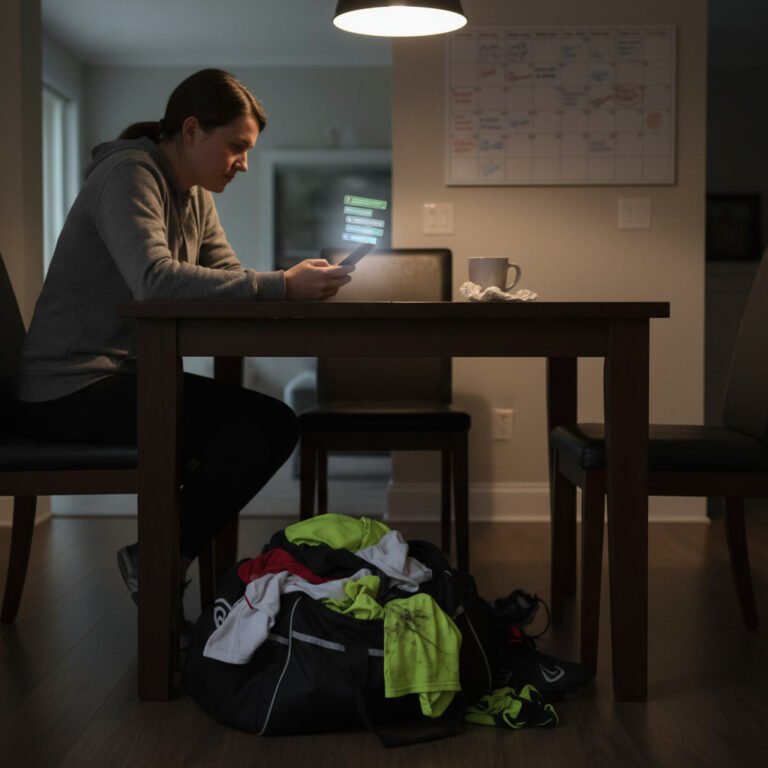

Sports time management sounds like something a productivity guru would sell in a course you’ll never finish. In reality, it’s the difference between feeling slightly in control of your life and wondering how it’s already Thursday when you still haven’t done laundry.
If you’re a sports family, time management is not a skill you’re trying to master. It’s a fire you’re constantly putting out. Practices end late. Homework starts too late. Dinners happen in the car. Weekends disappear to tournaments three towns over that somehow require a hotel and a small mortgage.
Youth sports don’t slowly steal your time. They bulldoze it.
Every season starts with good intentions. You’ll stay organized this year. You’ll plan ahead. You’ll keep routines. Then the schedule hits. Back-to-back practices on school nights. Early games after late homework. Group chats blowing up at 10pm about uniforms you swear were already discussed.
Suddenly, your entire family calendar is built around a youth sports schedule that never stops moving. Time management stops being about balance and starts being about survival.
Here’s the hard truth most families learn too late. Discipline is not the problem. Motivation is not the problem. Your kid isn’t lazy. You’re not failing.
The problem is that busy sports family life requires systems, not willpower.
This article is not about squeezing more productivity out of already exhausted kids. It’s about sports time management that actually works in real households. The kind that reduces stress, prevents burnout, and keeps sports fun instead of feeling like a second full-time job.
Because the game clock is always running. Life doesn’t have to feel like it’s racing you.
Why Youth Sports Break Time Management Without You Noticing

Youth sports do not destroy time management in a dramatic way. They break it slowly, quietly, and just enough that most families never notice until everything feels constantly rushed.
Most parents think their time management fell apart because life got busier. In reality, it fell apart because the structure never changed. The same routines that worked before the season simply get stretched until they stop working at all.
It usually starts with small adjustments that feel harmless. An extra practice added on a school night. A skills session labeled optional that everyone knows is not actually optional. A late evening where homework gets pushed back because everyone is already tired. You adapt. You move things around. You assume this is just part of the season.
Then the schedule tightens.
Weekends stop feeling like weekends and start feeling like logistics exercises. Travel tournaments turn Saturdays and Sundays into all day commitments built around parking, weather, and field locations. Your youth sports schedule slowly becomes the foundation of the household calendar instead of one part of it.
This is where time management starts to fail without setting off alarms.
School days become packed with practices that end just late enough to derail the evening. Homework happens when kids are mentally spent, often sitting in the car with cleats still on and a backpack balanced on a duffel bag. Bedtimes drift later while wake ups stay early. Dinner becomes whatever can be eaten between fields.
Busy sports family life does not feel chaotic at first. It feels rushed in a way that slowly becomes normal.
If this sounds familiar, you are probably dealing with reactive scheduling. That means every day is spent responding to what already happened instead of shaping what comes next.
Common signs sports time management is slipping include:
• Evenings that feel constantly behind
• Homework turning into late night battles
• Everyone feeling tired before the week is half over
None of this feels broken enough to fix on its own. Together, it creates pressure that leaks into every part of family life.
That is why youth sports do not just take up time. They reshape how time feels. And until families switch from reacting to designing their schedule, the stress never really goes away.
The Hidden Cost of Poor Sports Time Management

When time management slips, stress does not gradually increase. It moves in immediately and fills the space where structure used to be. There is no buffer. The moment schedules become reactive, pressure becomes the default setting.
Parents start feeling permanently behind, even on days when nothing technically goes wrong. Kids feel rushed before they even know why. Small issues trigger big reactions because everyone is operating with no margin left. The problem is not attitude. It is exhaustion caused by constant time compression.
This is when the damage starts showing up outside the schedule. Car rides feel tense instead of quiet. Conversations feel heavier than they should. Even neutral moments carry an edge because the family is always thinking about what comes next. Sports stop feeling like something you enjoy together and start feeling like something you manage.
Over time, this turns into burnout.
Not the dramatic kind that forces an immediate stop, but the slow kind that drains energy and enthusiasm first. Kids lose excitement and start going through the motions. Parents lose patience and begin dreading the logistics more than celebrating progress. Practices feel longer. Games feel stressful. Fun becomes optional instead of automatic.
The most dangerous part is how normal this feels while it is happening. Nothing seems broken enough to fix. It just feels like the season is demanding, the schedule is tight, and everyone needs to push a little harder.
That is why spotting the early signs of youth sports burnout matters. By the time emotions boil over, the damage to motivation has already been done.
Good sports time management does not make schedules perfect. It creates breathing room. And breathing room is what keeps pressure from turning into burnout and joy from quietly disappearing.
The Family Time Management Reset

Sports families do not need more apps, color-coded systems, or productivity hacks. They need one clear framework that everyone in the house understands and follows. When time management works, it is because the rules are simple and visible, not because parents are constantly reminding everyone what is happening next.
One shared calendar
Every practice, game, tournament, and school obligation needs to live in one place. Not two calendars. Not a mental note. Not a group chat scroll from three weeks ago. When schedules are split across multiple places, time management fails before the week even begins. Many families use a shared wall calendar like the Skylight to keep everything visible without relying on constant reminders.
Kids should see the calendar too. Visibility changes how time feels. When young athletes understand what their week looks like, they stop feeling surprised by it. That sense of predictability alone reduces stress, resistance, and the nightly feeling of being caught off guard.
One weekly planning session
Once a week, spend ten intentional minutes looking ahead. This is not about reacting to tomorrow. It is about shaping the entire week before it starts. This is where families identify which days will be heavy, which days will be lighter, and where expectations need to adjust.
This single habit separates reactive families from proactive ones. Reactive time management always feels rushed. Proactive time management builds margin before anyone needs it.
One protected rest window
Every sports family needs at least one non-negotiable recovery block built into the schedule. No practices. No obligations. No errands disguised as downtime. If rest is only allowed when everything else is finished, it never actually happens.
This is not about being lazy. It is about preventing overload before it turns into burnout. Rest is not a reward. It is part of the system.
Strong sports time management does not come from squeezing more into the calendar. It comes from designing the calendar so the family has enough energy to show up fully for what actually matters.
Tools That Make Sports Time Management Easier (Without Adding Chaos)
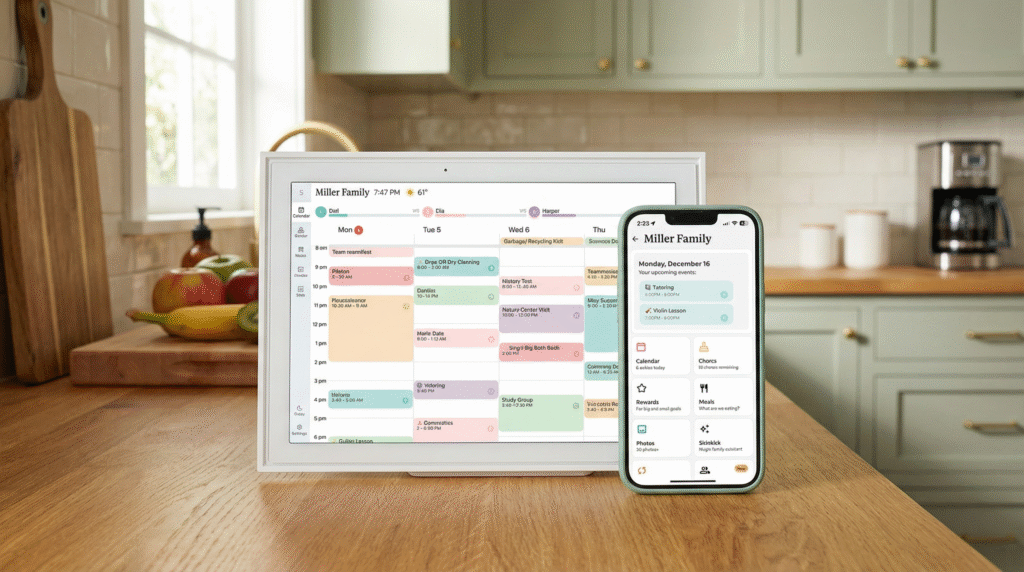
Skylight Calendar (15-Inch Digital Wall Planner)
A shared touchscreen calendar that keeps practices, games, and school schedules visible to the whole family so nothing lives only on one parent’s phone. 👉 Check the Skylight Calendar on Amazon!

Chilled Portable Snackle Box
A simple way to turn snacks into a grab-and-go system for practices, tournaments, and long travel days. Keeps food organized, temperature controlled, and eliminates last-minute snack chaos.👉 Check the Snackle Box on Amazon!

Liquid I.V. Hydration Multiplier Popsicle Firecracker
An easy way to support hydration on busy game days when water alone isn’t enough. Simple to pack, quick to mix, and helps maintain energy and focus through long practices and tournaments. 👉 Check Liquid I.V. on Amazon!
Game Day Time Management Collapse

Game days break normal time management rules. The schedule might look manageable on paper, but the reality is that competition compresses time, drains energy, and amplifies emotion in a way that no practice day ever does.
By the time a game ends, most kids are running on adrenaline, not focus. Their bodies are tired, their emotions are still elevated, and their brains are not in a state that supports learning, reflection, or problem solving. Parents are often in the same place, whether they realize it or not.
This is why nothing productive happens after games.
Homework that would normally take thirty minutes suddenly feels impossible. Conversations that start calmly turn emotional faster than expected. Decisions made in this window are usually poor, not because anyone is doing something wrong, but because the nervous system has not recovered yet.
Where families get stuck is trying to force normal expectations onto an abnormal moment. They expect focus when the tank is empty. They treat post-game time like any other evening, even though it is not.
Strong sports time management does not fight this reality. It designs around it.
Post-game time should be treated as recovery only. That means quiet car rides, limited stimulation, and space for emotions to settle before any meaningful conversation happens. Reflection works best after the body has come down, not while it is still in a heightened state.
This is why the car ride home after games should be protected time, not correction time. Feedback given too early rarely lands the way parents intend, regardless of tone or intent.
Good sports time management accepts how game days actually work. Families who respect this boundary recover faster, communicate more clearly, and avoid turning one game into a lingering emotional issue that follows everyone into the next week.
Time Management Systems That Actually Work for Sports Families

Simple systems always beat perfect schedules. Sports families do not fail because they lack effort. They fail because too many decisions are left to the last minute, when energy and patience are already low.
Strong sports time management removes friction before it shows up.
Pre packed bags
Gear scrambling is one of the fastest ways to waste time and spike stress. When bags are packed daily, something always gets forgotten. When bags are packed once and maintained weekly, game days start calmer by default.
A ready bag eliminates last minute decisions, reduces arguments, and prevents the familiar panic of realizing something important is still sitting at home. This is not about organization for its own sake. It is about protecting energy when it matters most.
Dedicated snack bins
Fuel should never be a daily debate. When kids are hungry and tired, decision making breaks down quickly. A dedicated snack bin turns fueling into a system instead of a conversation.
Keep the bin stocked with reliable options that work on the go and survive long days. This saves time, prevents meltdowns, and keeps energy more stable throughout the week. For ideas that actually travel well, link internally to best sports snacks for teams.
Homework windows
Not every night is equal, and pretending they are is where student athlete time management starts to fail. Heavy practice days should come with lighter homework expectations. Lighter days can handle deeper focus.
When expectations flex with energy instead of fighting it, homework gets done more efficiently and with far less resistance. This is not lowering standards. It is aligning effort with reality.
Hydration prep
Dehydration quietly destroys focus, mood, and patience long before anyone notices what is causing it. Pre filled water bottles remove one more decision from already busy game days and help kids stay regulated longer.
Consistent hydration supports both performance and emotional stability. Reinforce this habit by linking internally to sports water bottles hydration so families can build it into their system.
Strong sports time management works because fewer things are left to chance. When the basics are handled automatically, families have more capacity for what actually matters.
Teaching Kids Ownership of Time

Time management cannot live only in a parent’s head. When adults carry the entire schedule, kids never learn how time actually works. They just learn how to react to it.
What kids need is not micromanagement. They need responsibility in small, manageable pieces. Ownership of time has to be taught the same way any other skill is taught, gradually and with room to make mistakes.
The process starts small and stays simple. Kids can manage their own packing, check the shared calendar, and understand when homework needs to happen based on the day’s schedule. These are not chores. They are practice reps for independence.
When kids participate in managing their time, confidence builds quietly. They stop feeling surprised by the week. They start anticipating what is coming instead of resisting it. That sense of control changes how they show up, both at home and in sports.
This is where coachability improves.
Kids who manage their time better tend to handle feedback with less defensiveness. They recover faster from mistakes because they are not already overwhelmed. They stay engaged longer because they feel capable, not controlled.
Ownership of time also reduces youth sports pressure. When kids understand their schedule and role within it, performance stops feeling like something happening to them and starts feeling like something they are part of. Learning stays at the center instead of stress.
Strong sports time management does more than organize weeks. It teaches kids how to plan, adjust, and recover. That is why time management is not just a family system. It is a life skill that carries far beyond sports.
Conclusion: Time Freedom Beats Perfect Schedules

Perfect schedules do not exist in youth sports, and families who chase them end up more frustrated than organized. The goal was never to control every minute of the week. The goal was to stop chaos from deciding how the week feels.
Strong sports time management works because it removes unnecessary friction. Simple systems create calm. Calm creates better communication. Better communication keeps sports from turning into a source of constant stress inside the home.
The game clock will always move fast. Practices will run late. Tournaments will steal weekends. That part does not change. What can change is how much pressure those demands put on a family.
When time management works, families stop reacting to every schedule change and start moving through seasons with more confidence and less tension. Kids feel supported instead of rushed. Parents feel present instead of behind. Sports return to what they were supposed to be in the first place.
That is the real win.
Read This Before the Next Game Blows Up Your Weekend
The Team Chat Notification Apocalypse 2026
Why one innocent group chat turns into a 24-hour anxiety machine that no parent can escape.
2026: Sports Specialization Is Failing Young Athletes
How year-round pressure, early commitment, and adult expectations are quietly burning kids out.
The Ultimate Sideline Survival Tool: Why the GoPro HERO13 Black Is the Only Teammate You Need
Because filming beats yelling, and evidence beats arguments every single time.
Sideline Shenanigans
The unfiltered chaos, unspoken rules, and behavior we all see but pretend isn’t happening.
The Questions Sports Parents Ask (Usually at 10:47 PM)
What is the biggest time management mistake sports families make?
Trying to treat sports season like a normal schedule. Practices, games, and travel change how energy and focus work, and time management breaks when families ignore that reality instead of designing around it.
How do you balance school and sports without burning kids out?
By adjusting expectations based on the day. Heavy practice days require lighter homework loads, earlier recovery, and fewer decisions. Balance comes from flexibility, not forcing the same routine every night.
Should kids be responsible for managing their own schedules?
Yes, but gradually. Kids should start by managing packing, checking the shared calendar, and understanding homework windows. Ownership builds confidence and coachability when it’s taught in small, manageable steps.
Is it okay to skip homework or conversations after games?
It’s not about skipping responsibility, it’s about timing. Post-game time should focus on recovery, not productivity. Homework and feedback land better once emotions and energy levels stabilize.
How do you know if poor time management is causing burnout?
When everything feels rushed, small issues trigger big reactions, and joy starts disappearing before performance drops. These are often early warning signs that the system needs adjusting, not the athlete.