
The Unicorn of the Sideline

“If the coach’s favorite were a person, they’d be a golden retriever in a hoodie — loyal, calm, and never yelling ‘Shoot!’ from midfield.”
The coach’s favorite. You know exactly who I’m talking about. That one parent who stands on the sideline like they’ve reached a higher level of enlightenment while the rest of us are unraveling like cheap folding chairs in the rain.
Their kid could trip, miss the net, or accidentally score on their own goal, and they’d still smile, clap once, and say, “You’ll get the next one, buddy.” Calm. Collected. Unshakable. The mythical coach’s favorite in the wild.
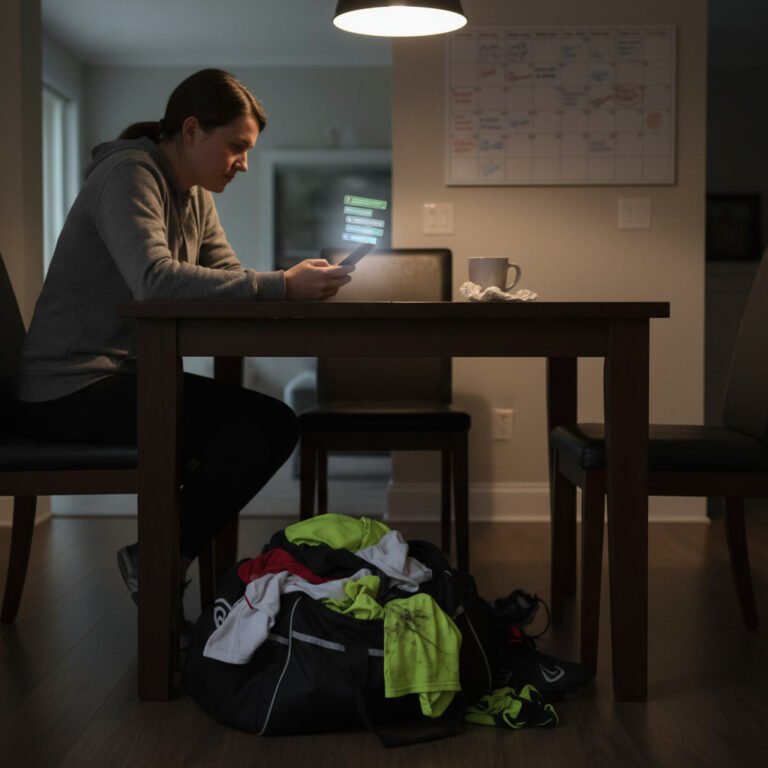
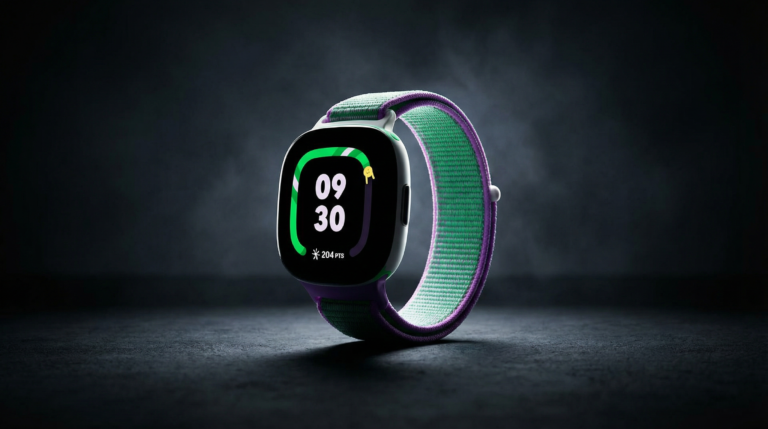
Meanwhile, I’m over here pacing like I’m negotiating a peace treaty with the ref. My heart rate’s in the red. My FitBit just congratulated me on completing a marathon. I’ve whispered more to my Dunkin cup than I have to my own child.
And deep down, I know the truth. Every team has one of them. And the rest of us? We’re emotional raccoons digging through the dumpster fire of our own expectations.
Confession Time: I Tried to Be the Coach’s Favorite Once
Spoiler: I lasted four minutes.
I told myself, “This season, I’m chill. I’m centered. I’m going to be the coach’s favorite.” Then the whistle blew, and some poor ref missed the most obvious foul in human history. My inner calm disintegrated faster than a snack shack snow cone in July. Suddenly I was standing, gesturing, and making noises that can only be described as emotionally possessed duck calls.
The coach’s favorite doesn’t do that. They don’t lose control. They stand there, hands in pockets, unbothered, like a Zen master in Lululemon. They remind us that emotional stability is technically an option, we just keep clicking decline.
Mockumentary Moment: Nature Documentary Mode On
Voice-over, David Attenborough style:
“Here we observe the coach’s favorite in their natural habitat, the sideline. Watch how they remain perfectly still while chaos erupts around them. Their mating call is a single polite clap. Their natural predators include anyone holding a clipboard or a whistle.”
They sip coffee like it’s chamomile tea brewed from patience itself. Their body language says “I am at peace,” while ours screams “I’m one bad call away from joining a true-crime podcast.”
Why the Coach Loves Them (and Secretly Prays for More Like Them)

Because they’re sane.
They don’t hover at practice with clipboards. They don’t corner the coach after games with PowerPoint presentations about “strategic player rotation.” They don’t send highlight reels titled “Urgent: Future D1 Material.”
The coach’s favorite parent talks like a human, not a contract lawyer. When their kid’s upset, they don’t explode and blow up. They ask logical questions like, “What can we work on?” instead of “Why do you hate my child?”
They know the difference between advocating for their kid and auditioning for a Netflix docuseries called Sideline Psychos.
Meanwhile, the Rest of Us: Certified Chaos
We analyze lineups like it’s the NFL draft. We have theories, spreadsheets, and suspicions. We whisper, “Do you think Coach is mad about the last game?” like we’re plotting espionage.
Our group chat has more drama than The Bachelor. Someone misreads a message about snack duty and suddenly we’ve got 62 notifications, a passive-aggressive meme war, and three different people typing “LOL” but definitely not laughing.
The coach’s favorite? They muted the chat three seasons ago and never looked back. They’re living their best drama-free life while the rest of us are emotionally hydrating with Gatorade and regret.

XbotGO Chameleon
Let the Xbotgo Chameleon do the filming while you master your “coach’s favorite” face. No yelling, no shaking camera, just smooth highlights. Xbotgo Chameleon.
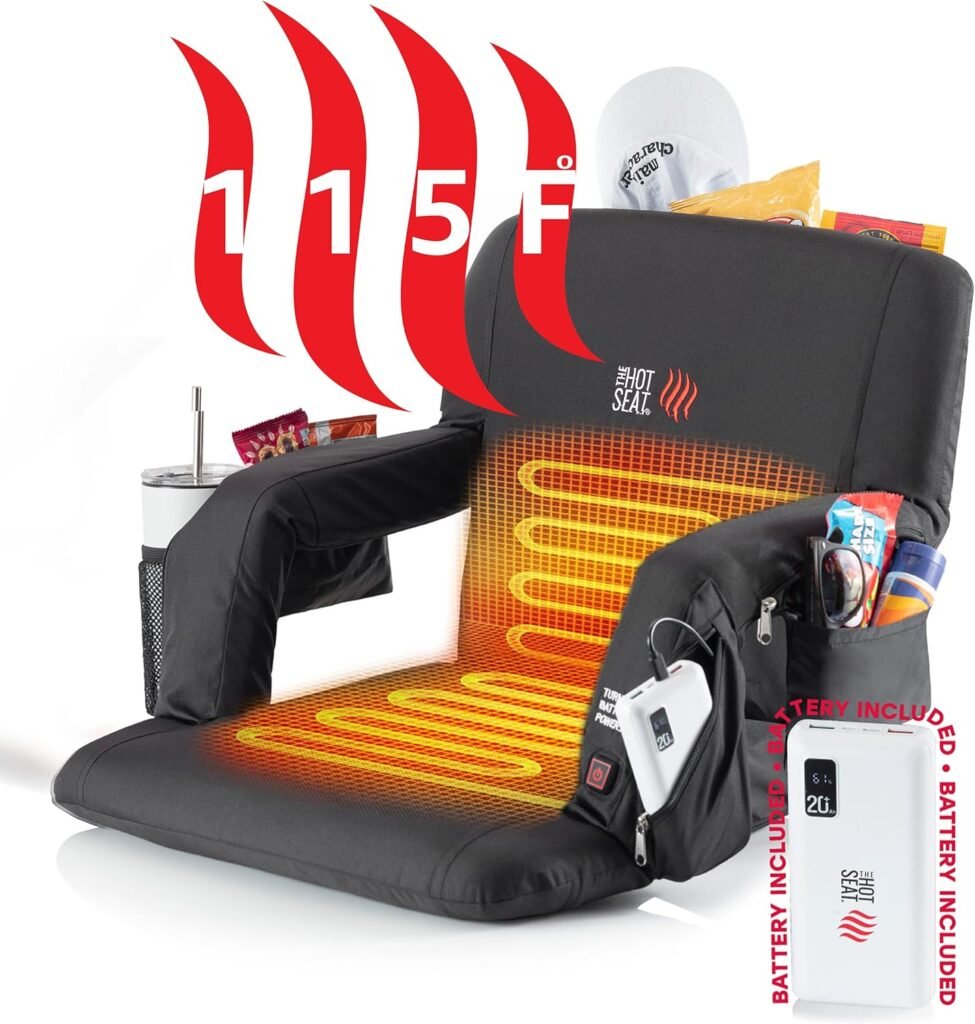
POP Heated Stadium Seat
Be the calm parent and the comfortable one. This heated seat says, “I’m chill,” even when your blood pressure isn’t. POP Heated Stadium Seat.
The Solo-Sitter Energy
YouYou can spot them before the first whistle blows. The calm one. The coach’s favorite. They sit alone, not awkwardly but with purpose, like they’ve discovered the secret to surviving youth sports without losing their soul. It’s their peaceful bubble. No gossip, no sideline drama, just quiet observation and a soft smile that says, “I’ve seen things.”
They clap, not coach.
They smile, not strategize.
They bring snacks, not spreadsheets.
When a ref makes a brutal call, they don’t flinch. When another parent starts narrating every play like it’s the Super Bowl, they just sip their coffee and drift somewhere better in their mind. They nod knowingly, the kind of nod that says, “Ah yes, another day in the youth sports jungle.”
And that’s exactly why the coach breathes easier when they walk up. There’s no hidden agenda, no conspiracy theory about playing time, no follow-up email titled Quick Thought About Today’s Game. Just quiet support.
They’re the calm in our collective storm, the human version of airplane mode, and deep down, every one of us wishes we could borrow a little of that energy for the next tournament weekend.
If you missed our last sideline meltdown feature, “Top 10 Sideline Meltdowns You Secretly Admired,” you’ll want to check it out next.
The Psychology of the Coach’s Favorite — Why They’re Built Different
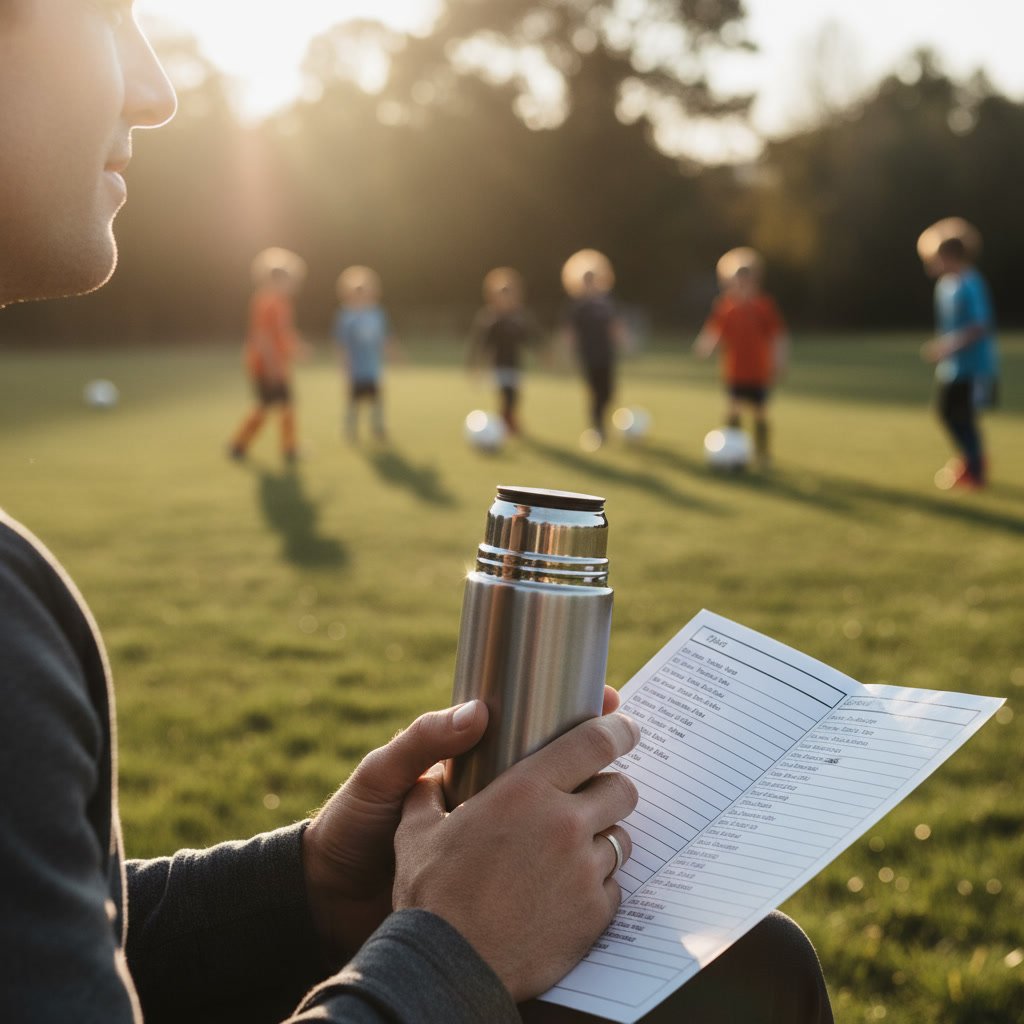
Inside the Mind of the Calm Parent
The coach’s favorite doesn’t just behave differently, they think differently.
While the rest of us are whisper-yelling “Move your feet!” like we’re directing traffic, this parent is breathing through their nose like a monk who paid for premium patience.
They’ve cracked a rare mental code. They understand that youth sports are not a referendum on parenting. Their child’s playing time isn’t a public Yelp review of their worth as a mom or dad.
The coach’s favorite sees the game for what it is, a blur of effort, chaos, and growth. They celebrate the effort, not the scoreboard. They clap for a good pass even when it’s not their kid. They actually mean it when they say, “as long as they’re having fun.”
Meanwhile, the rest of us say we want our kids to “build character,” then immediately lose ours when they miss an open net.
How They Achieved Emotional Enlightenment
Most of us are one questionable whistle away from needing a juice box and a licensed therapist. But the coach’s favorite wasn’t always this calm. They used to live in the same chaos we do, heart pounding, throat sore, convinced every call was a personal attack from the universe.
Somewhere between the third carpool crisis and the fifteenth “Why isn’t my kid starting?” conversation, something inside them shifted. Not a breakdown but a breakthrough. They realized no one remembers who won the sixth grade championship. No college scout is hiding behind the snack shack with a clipboard and a scholarship form. The only person keeping score that hard is you.
That moment set them free. Now when the whistle blows, they exhale like a yoga instructor on a moving bus. They have learned that peace does not mean indifference. It means knowing what truly matters and what does not deserve your blood pressure.
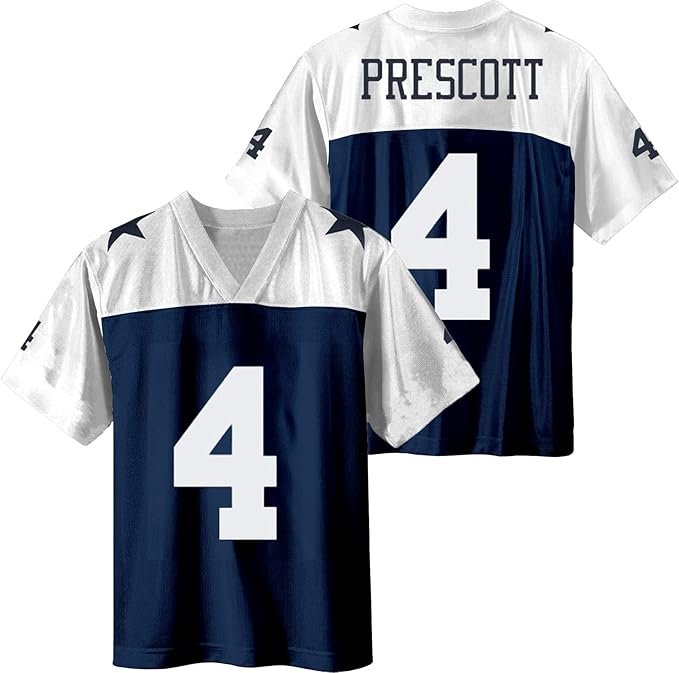
Dak Prescott Jersey
Let your kid rep America’s Team and look cooler than the snack parent. Dak Prescott’s #4 never goes out of style.
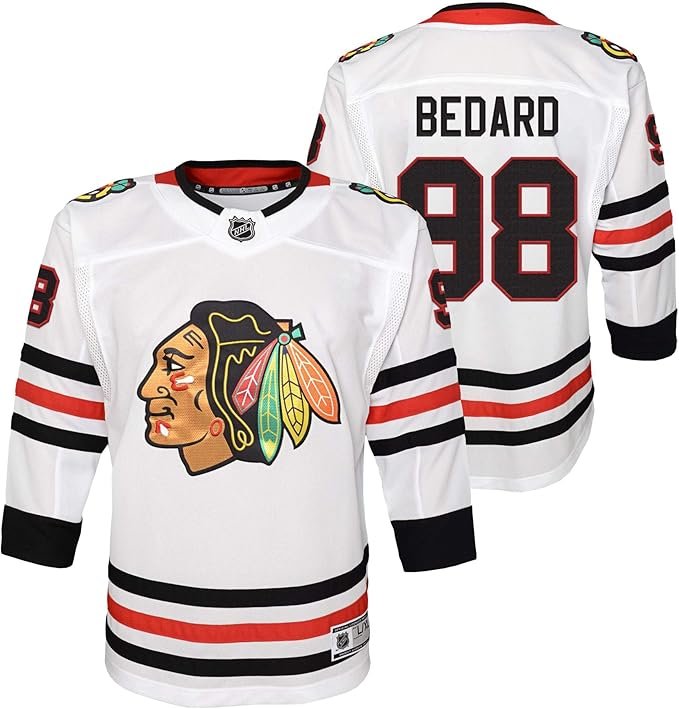
Connor Bedard #98
Let the rising star wear the same number your kid’s aiming for—this jersey’s built for future legends and proud fans alike. Bedard Jersey.
Their Secret Weapons
Perspective.
They know their child’s journey is a marathon, not a sprint, and definitely not a short-track roller derby of emotions.
Empathy.
They see the coach juggling twenty kids, two dozen parents, and one half-charged coffee thermos. They don’t want to add another problem to the pile.
Boundaries.
They don’t text the coach on Sunday nights. They don’t respond to the group chat after 9 p.m. They’ve muted half the world and call it peace of mind.
Self Awareness.
They know they’re one bad tournament away from relapse. That humility keeps them grounded.
Meanwhile, the Rest of Us
We always start the season with good intentions. We tell ourselves this is the year we will be calm, composed, the picture of sideline grace. We even say it out loud, “This year, I’m just going to enjoy it.” Then the whistle blows, someone shouts “Box out!” and suddenly we are right there in the mix, yelling too, even though not a single one of us could confidently explain what boxing out actually means.
According to a completely fake but emotionally accurate study from the Sideline Behavioral Institute, 93 percent of parents who scream “PASS IT!” cannot identify which player currently has the ball. The numbers do not lie, but the volume sure does.
We do not mean to lose it. It just happens. Something about youth sports hits a deep, primal nerve. Our protective instincts kick in, our egos hitch a ride, and before we know it we are pacing like unpaid assistant coaches auditioning for a documentary.
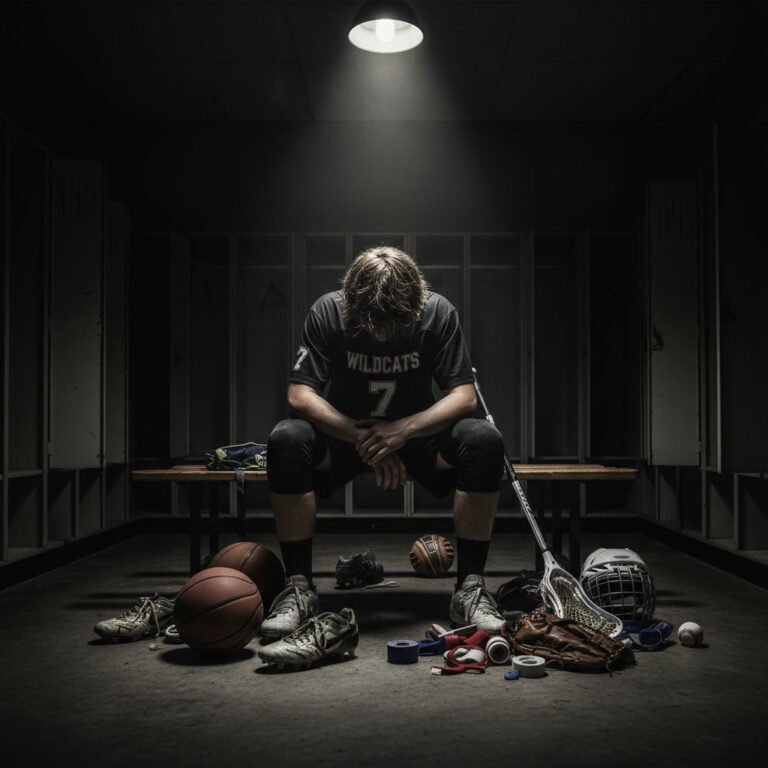
We want our kids to shine because when they do, it feels like we are doing something right. When they struggle, it feels like a personal failure we cannot quite name. That is the trap.
The coach’s favorite escaped it. They unplugged the wire that connects performance to self-worth. They still care, deeply, but they have learned that every fumble, miss, or meltdown is not a crisis. It is just part of the story. They are still on the sideline, but now they are playing a completely different game.
The Sideline Scene
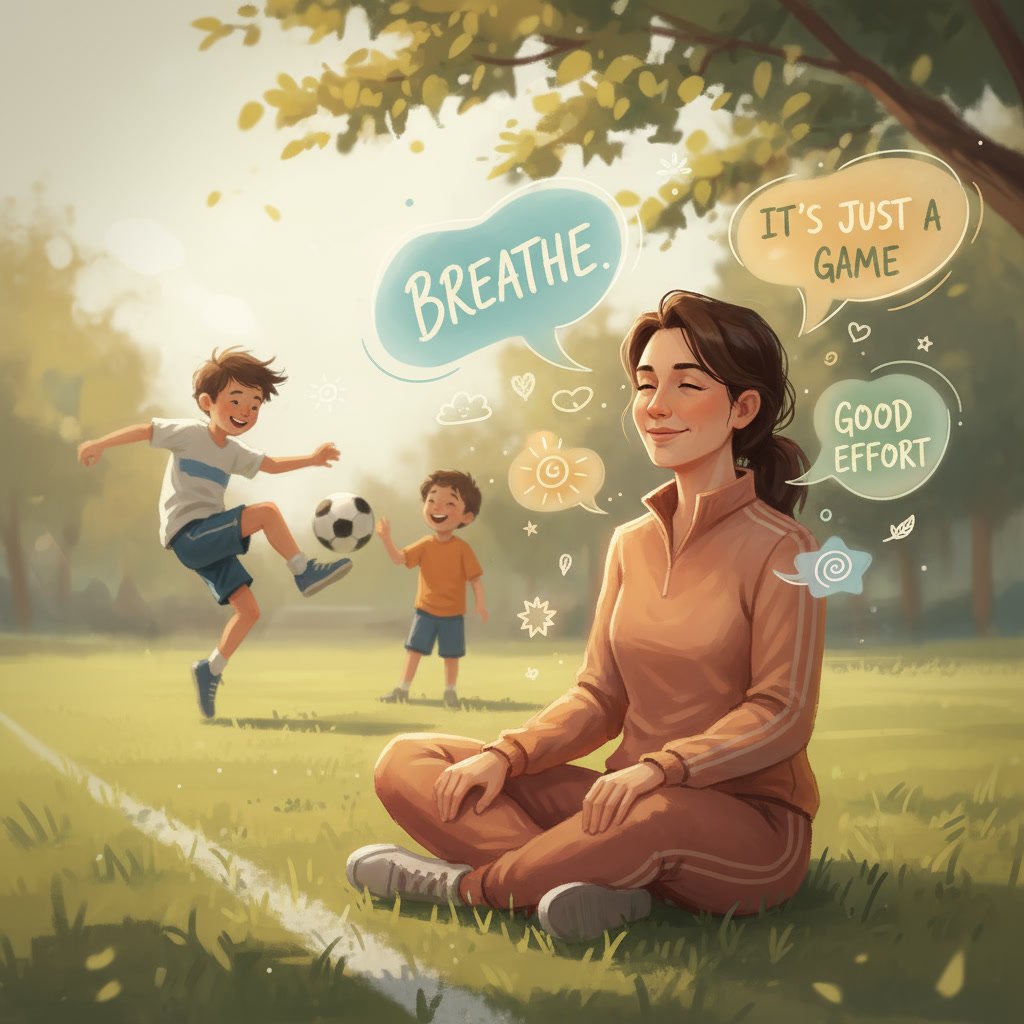
Picture it. The coach’s favorite stands quietly with a coffee in hand, surrounded by an aura of calm the rest of us can only dream of. Their eyes follow the play, steady and focused. No commentary, no muttering under their breath, no silent attempt to coach through body language. Just calm observation, like a monk who has seen it all before.
Now shift the camera to the rest of us. Pure chaos. We are pacing like air traffic controllers in a thunderstorm. One parent is clutching a laminated stat sheet that looks suspiciously like a playbook. Another is arguing with a grandparent on Bluetooth about who forgot the folding chairs. Someone just dropped an entire bag of Goldfish and it is now raining snacks across the bleachers.
The noise, the drama, the caffeine, it all blends into one beautiful mess of love and delusion. Meanwhile the coach’s favorite does not flinch. They take a slow sip of coffee, offer a single clap, and continue to exist in perfect serenity.
They are the eye of the storm while the rest of us are out here auditioning for a reality show called Sideline Breakdown: Parental Edition.
Therapy Moment
If this were a support group, it would start the same way every week.
“Hi, I’m Brian, and I yelled ‘Move your feet!’ at my kid’s lacrosse game again.”
“Hi, Brian.”
“I know the coach’s favorite would have just smiled and clapped quietly, but something came over me. One second I was fine, the next I was shouting like I was mic’d up on ESPN.”
The room nods in understanding. Someone whispers, “You’re safe here.” Another parent wipes away a tear, muttering, “I yelled ‘Spread out!’ during a power play. I don’t even know what sport that is anymore.”
We laugh, because we have to. Every parent hits their limit eventually. The coach’s favorite just knows exactly where theirs is and guards it like it’s the last granola bar in the team snack bag. While the rest of us spiral into caffeine-fueled emotional performance art, they stay grounded, sipping coffee and radiating peace like it’s their part-time job.
They’ve ascended to a higher level of sideline existence, and honestly, at this point, it feels less like parenting and more like a Jedi discipline.
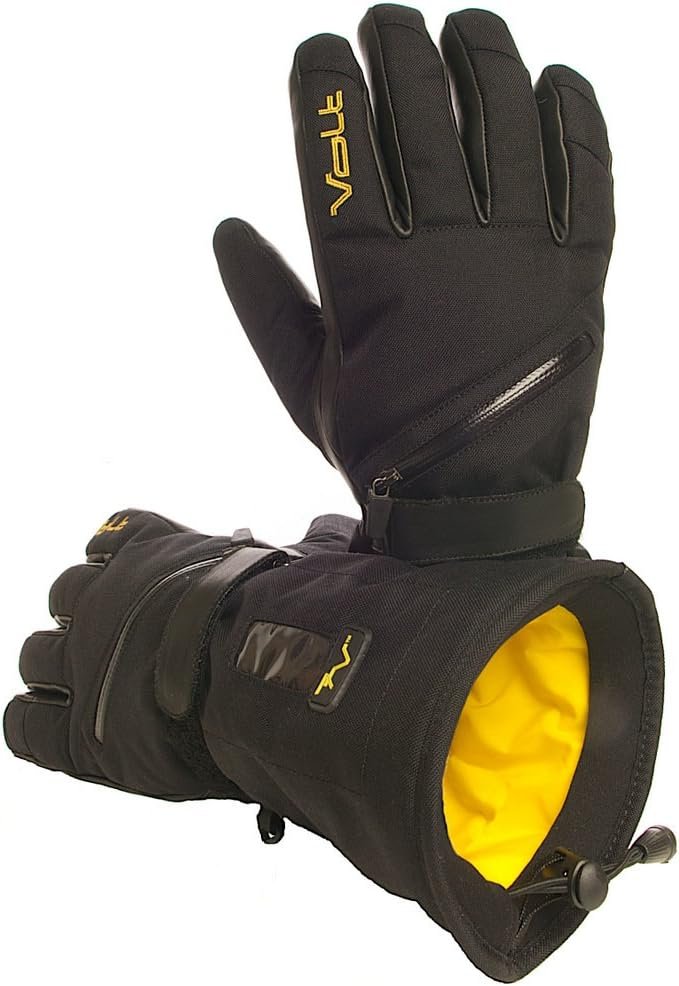
Volt Heated Gloves
Keep your hands warm while clapping politely through freezing tournaments. The MVP of late-season sanity. Volt Rechargeable Heated Gloves
Connor Bedard #98
Let the rising star wear the same number your kid’s aiming for—this jersey’s built for future legends and proud fans alike. Bedard Jersey.
The Ripple Effect
Something happens when the coach’s favorite shows up. Their calm spreads like WiFi. The coach starts to breathe easier. The kids loosen up. The entire sideline shifts from pressure to play, from intensity to actual joy. One person’s energy changes the whole field.
While the rest of us are out here delivering unsolicited halftime speeches and yelling instructions our kids cannot even hear, the coach’s favorite is quietly modeling something bigger. Grace, composure, and the ability to simply enjoy the moment.
They understand the truth that most of us forget in the chaos. Years from now, your child will not remember the score, the stat line, or whether they missed that shot. What they will remember is whether you smiled.
“The coach’s favorite doesn’t care less, they just care smarter. They choose peace over proving a point.”
Why the Rest of Us Can’t Compete, and Don’t Really Want To
We Mean Well, We Really Do
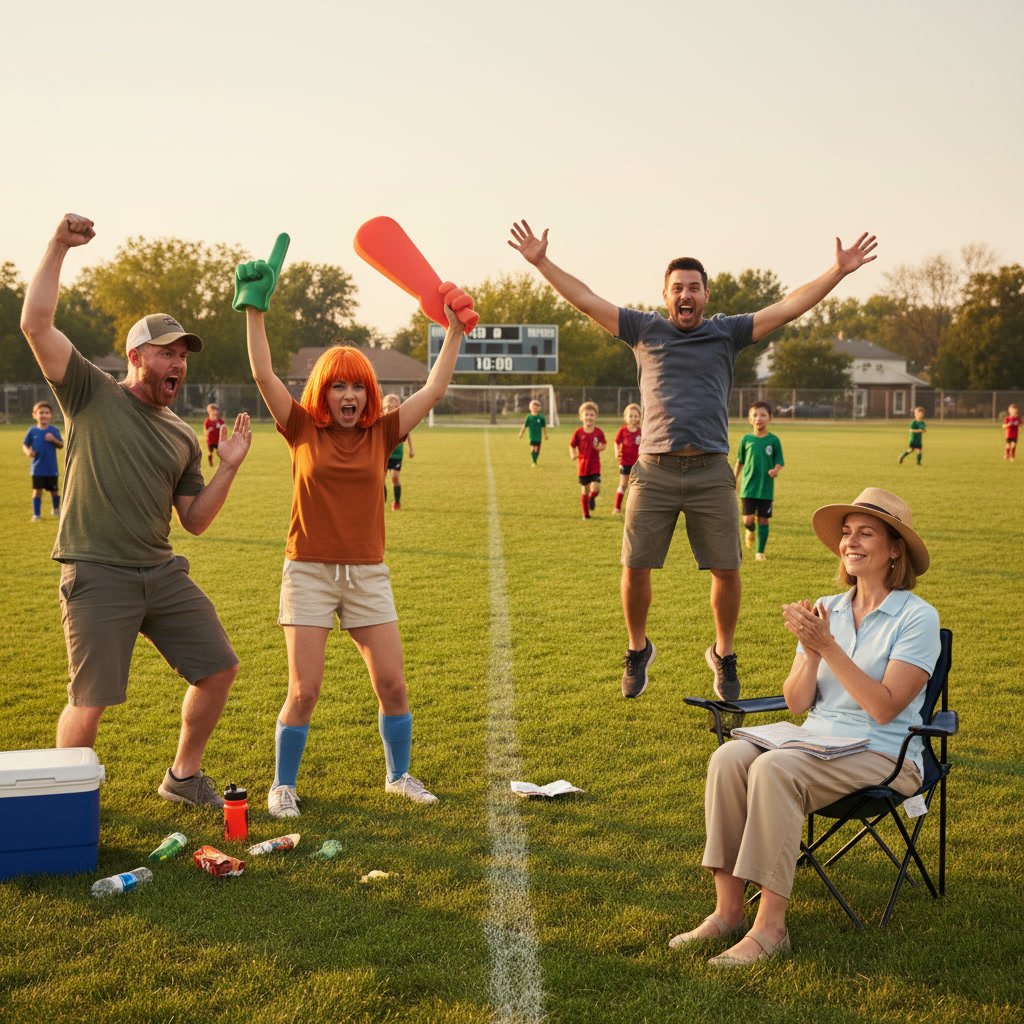
Let’s be honest. None of us wake up thinking, “Today I’m going to lose my composure at a youth sporting event.” It just happens. One minute we are sipping coffee and promising ourselves we will stay calm, and the next we are halfway onto the field yelling, “ARE YOU BLIND, REF?” with the passion of someone defending their doctoral dissertation.
We swear we are rational adults in every other setting. We pay bills, hold jobs, and even say please and thank you. Some of us volunteer. But hand us a folding chair, a whistle, and a scoreboard, and suddenly we are one bad call away from starring in a viral sideline video.
The coach’s favorite remains calm because they have evolved beyond the chaos. They have cracked the code. The rest of us are still out here running on adrenaline and Dunkin, emotional caffeine experiments wrapped in team-branded hoodies, trying our best not to make the highlight reel for all the wrong reasons.
Sideline Chaos, Unfiltered
The sideline is its own living ecosystem, powered entirely by caffeine, adrenaline, and questionable judgment. There is always a chorus of voices trying to “help,” but none of us are actually helping. Someone is providing play by play like it is ESPN, someone else is whispering strategies to themselves, and a few parents are locked in a heated debate over snack duty like it is a hostage negotiation.
And then, cutting through all that glorious chaos, stands the coach’s favorite. Calm. Still. Sipping from a travel mug that definitely does not contain whatever the rest of us are drinking. Their kid could miss the net by a mile and they would still smile and say, “That was a good look.” The rest of us react like we just witnessed a national emergency.
We like to think we are passionate, but if we are being honest, passion and panic look almost identical from ten feet away.
The Emotional Economy of the Sideline
We are not bad people. We just care too much in all the wrong ways. The coach’s favorite found peace, but the rest of us are fueled by chaos. We crave it. We live for the highs and lows.
There is a strange comfort in the drama. The parent group chat debates. The whispered theories about playing time. The long postgame car ride that starts as encouragement but somehow ends with, “You just didn’t look like you wanted it enough.”
If we are being honest, calm sounds nice in theory but feels unnatural in practice. The coach’s favorite is somewhere sipping herbal tea and meditating between quarters. We are pounding iced coffee and mentally drafting a strongly worded text we will never send.
We like to say we want their peace, but deep down we know the truth. We do not want to be them. Not really. Because if we ever achieved their level of calm, what would we even talk about?
The Truth We Don’t Admit
The reason the coach’s favorite is the coach’s favorite has nothing to do with perfection. It is because they make everyone’s life easier. They show up, they cheer respectfully, and then they do the hardest thing a parent can do at a youth game—they let the coach actually coach.
The rest of us mean well, but let’s be honest, we are basically unpaid assistant coaches with WiFi-level emotions. We are so invested we could list “sideline strategist” on a résumé. We truly believe that if we just yell the right thing at the right volume, our kid will suddenly gain superpowers and score like it is a Disney montage.
But here is the truth that none of us like to admit. Even with all our chaos, the game needs us too. The field needs that energy, that noise, that collective insanity that turns an ordinary Saturday into something unforgettable. The laughter, the caffeine-fueled optimism, the dramatic groans at bad calls—that is the soundtrack of youth sports.
The coach’s favorite brings peace. The rest of us bring the storm. And somewhere between the two, that is where all the best memories live.
If We’re Being Real
The coach’s favorite may have mastered peace, but we bring the personality. We are the color commentary, the emotional soundtrack, the living proof that chaos and love can absolutely coexist.
Sure, they are the model of composure, but without us, who would they even be compared to? The contrast makes them shine brighter. We are the spice in the stew, the spark in the storm, the heartbeat that gives every game its rhythm.
The sideline circus is part of the magic. It is messy, loud, and sometimes in need of a timeout, but it is also full of laughter, community, and wild devotion. Because yes, the coach’s favorite represents balance, but the rest of us represent life in its purest form. Joy, intensity, and unfiltered humanity. And that might be the most valuable thing of all.
“The coach’s favorite may have peace, but the rest of us have stories, and that is what makes youth sports legendary.”
How to Channel Your Inner Coach’s Favorite Without Losing Your Mind

We Can’t All Be Saints
Some of us were simply not built for calm. We were born with the reflexes of caffeinated squirrels and the emotional stability of a microwave popcorn bag. Fine one second, exploding the next. One bad call and we are unhinged, muttering like sports philosophers who have seen too much.
But the coach’s favorite was not born calm either. They earned it. They survived years of missed calls, lost cleats, and carpool confessions. They have done the emotional reps. Somewhere between postgame breakdowns and late night laundry therapy, they figured out that not every whistle deserves a reaction.
They found a way to survive youth sports with grace and maybe even a little wisdom. And if they can do it, then maybe there is hope for the rest of us. Or at the very least, we can fake it well enough to look calm while silently chewing through a mouthguard.
The Fake It Till You Chill Guide
This is not about perfection. It is about survival. We are not chasing enlightenment. We are just trying to get through a weekend tournament without saying something that haunts us later.
Breathe Before You Bark.
When you feel that primal yell rising, the one that ends with “Pass it,” take a breath.
By the time you exhale, the moment will have passed, and you will still have your dignity.
Master the Poker Face.
Your child knows when you are upset. The coach knows. The referee knows. Smile like a polite customer service agent who has seen too much.
Silence Is a Strategy.
Every sideline has its own soundtrack. Sometimes the best move is to go on mute and let the game breathe. You will be amazed how peaceful it sounds when you stop directing from the folding chair.
Pick One Drama Per Season.
You do not have to fight every battle. Choose one cause to care about and save your sanity. Maybe it is snack duty. Maybe it is carpool. Just not all of them at once.
Retire from the Scholarship Olympics.
Your kid is still learning how to put their jersey on the right way. Maybe wait a few years before talking about Division One recruiters.
The Calm Is Contagious

The coach’s favorite is not calm because they care less. They are calm because they finally understood something the rest of us forget. When your child looks to the sideline, they are not asking for coaching advice. They are looking for reassurance. They are checking your face, reading it like a scoreboard that tells them whether they are winning your approval or just surviving your expectations.
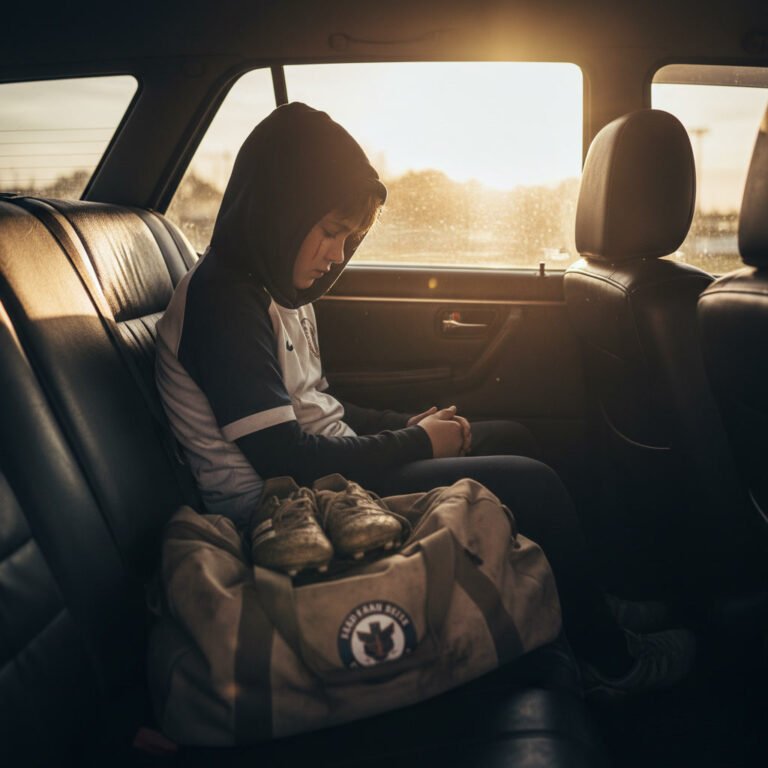
In that split second they are silently asking, “Am I okay?” And your expression answers long before you ever say a word.
The coach’s favorite has mastered that look, the one that says, “You are fine, keep going.” It is quiet confidence. It is love without pressure. It tells a child that their worth is not tied to the score, the stat sheet, or the noise around them. It reminds them that this is a game, and games are meant to be fun.
Every child deserves to see that face on the sideline, the one that says, without a single word, “I am proud of you no matter what.”
How It Feels When You Get It Right
There is a quiet kind of peace that comes from finally letting go. The game feels lighter. The air feels easier to breathe. The drive home no longer sounds like a courtroom recap filled with overanalysis and regret. You start to notice things you used to miss, like the way your kid smiles after a good play, the way teammates laugh together on the bench, the way the coach actually teaches lessons that have nothing to do with the scoreboard.
You begin to see the whole picture again. The fun, the effort, the learning. The reason you signed up for this in the first place.
And when the final whistle blows, you clap, you mean it, and you walk away proud. Not because of the score, but because you managed to keep your voice, your cool, and your self respect intact.
The Beautiful Middle Ground
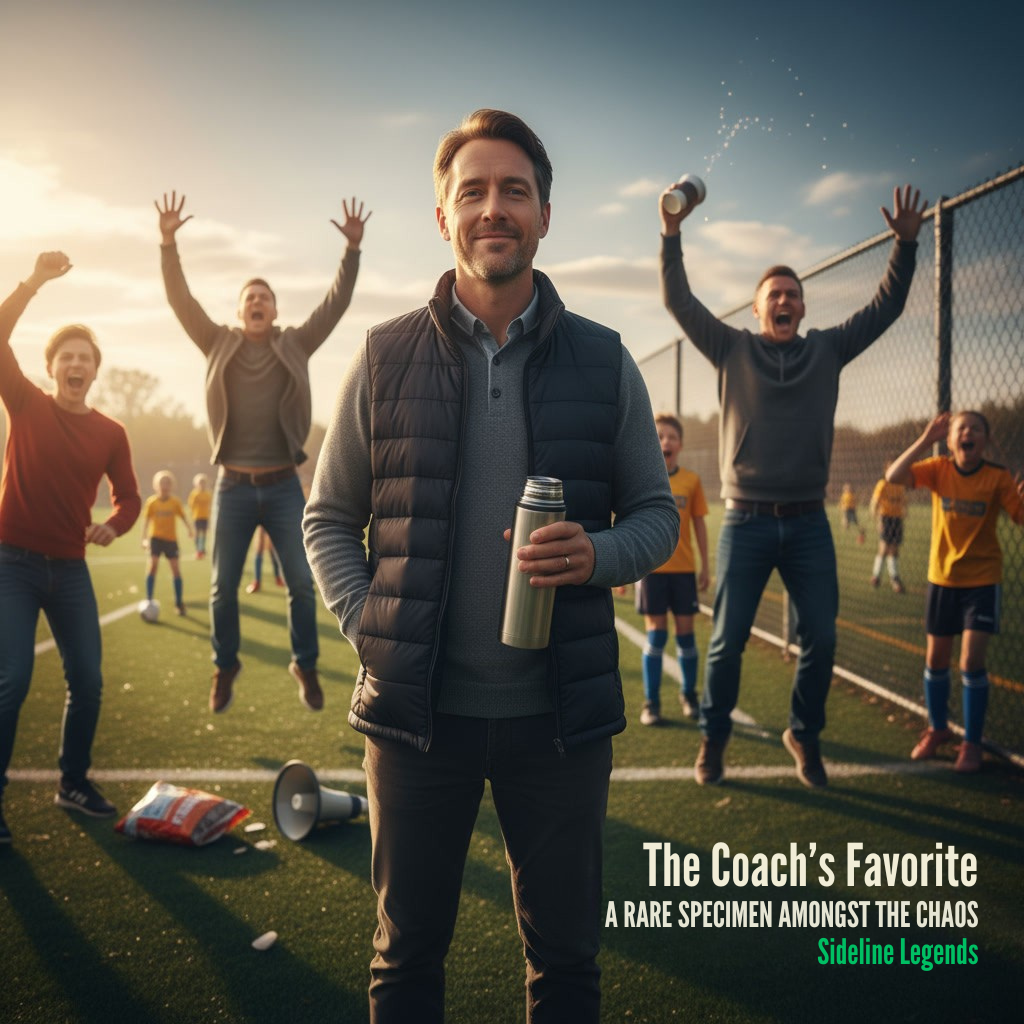
Maybe we will never become the coach’s favorite, and that is perfectly fine. The field still needs the loud parents, the passionate ones, the people who care so deeply they forget to stay composed. The ones who show up rain or shine, hearts on sleeves, caffeine in hand, ready to live and die by every play.
The truth is, it is not about being perfectly calm. It is about remembering why we are here. Not to control the game, not to fix every mistake, but to enjoy the ride.
Because in the end, that is what this whole thing is about. Watching our kids chase something that makes them feel alive. Seeing them try, fail, grow, and glow. The chaos is not the problem. It is the proof that we care, and that we were lucky enough to be there for it.
A Toast to the Sideline
Here is to the coach’s favorite, the calm soul who reminds us that grace under pressure is possible. The one who stands steady while the rest of us ride the emotional rollercoaster with no brakes. Their quiet presence reminds us what composure looks like when the stakes feel bigger than they really are.
And here is to the rest of us, the passionate, overly caffeinated, emotionally invested crew who turn every field into a mix of chaos and heart. We bring the energy, the noise, the laughter, and sometimes a little too much intensity. But without us, the story would be flat.
We may not always be calm, but we always show up. We care loudly. We love fiercely. We lose our voices, our patience, and occasionally our folding chairs, but never our reason for being there.
Because in the end, the sideline is where love meets chaos, where pride and panic coexist, and where memories that outlast the final score are made. So here is to every parent who cheers too hard, feels too much, and keeps coming back anyway.
That is the real spirit of youth sports, and that is worth raising your coffee to.
“You do not have to be the coach’s favorite. Just be the parent your kid still wants to wave to after the game.”
Check this one out next: Top Sideline Hacks Every Sports Parent Needs: from survival snacks to sanity savers, this guide covers everything that keeps you comfortable, caffeinated, and ready for whatever chaos game day brings.
FAQ: The Coach’s Favorite
What exactly is a “coach’s favorite” parent?
A coach’s favorite parent is the calm, respectful sideline saint who watches games without drama, supports their child without micromanaging, and treats the coach like a human being instead of a vending machine for playing time. They clap, they cheer, and they go home without causing emotional casualties.
Why do coaches love these parents so much?
Because they make everyone’s life easier. The coach’s favorite does not second-guess every decision, start group chat wars, or act like they are coaching from the bleachers. They trust the process, respect the staff, and keep things positive. Coaches wish they could clone them.
Can a regular parent become the coach’s favorite?
Yes, but it takes effort, patience, and maybe a deep breathing app. It starts by listening more, yelling less, and remembering that youth sports are about learning, not legacy. You do not have to be perfect. Just aim for calm enough that your kid still wants to make eye contact after the game.
Why do the rest of us struggle to stay calm on the sidelines?
Because we care too much. We want our kids to do well, and that passion sometimes shows up as stress, overcoaching, or accidental ref heckling. The trick is channeling that energy into encouragement instead of chaos. You can love the game without losing your composure.
What is one thing every sports parent should remember?
That your child will not remember the score in ten years, but they will remember your face in the crowd. Be the parent they want to see, not the one they pretend not to hear. The coach’s favorite already figured that out, and it changes everything.