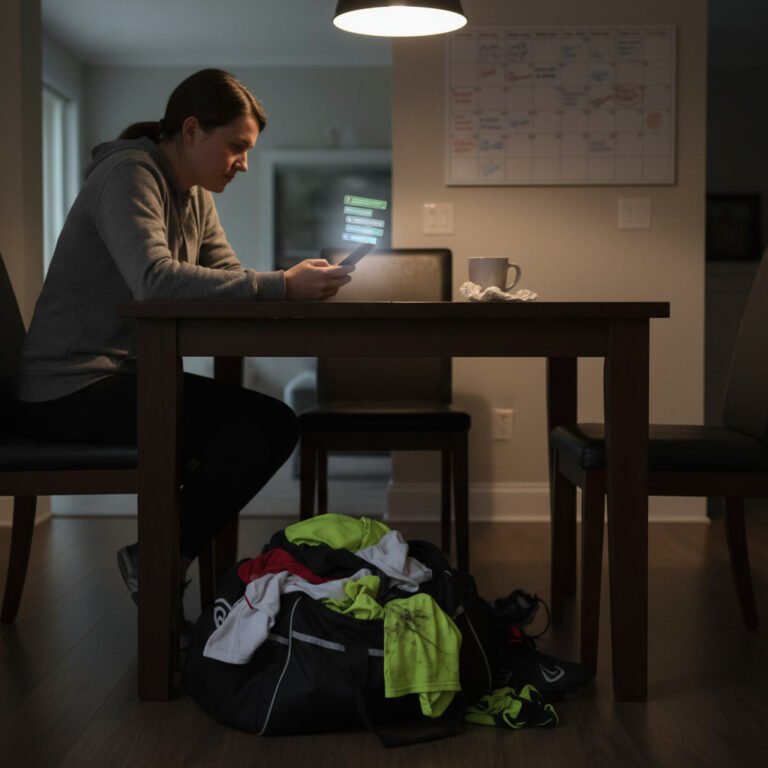

If you’ve ever eaten dinner in a parking lot with a spork and a sense of despair, this one’s for you.
At some point, “Let’s sign them up for a sport, it’ll be fun!” turned into a full-time logistics job with no HR department and no days off. Now your calendar is just practices, games, carpools, snack duty, and that one half-finished science project silently judging you from the kitchen table.
You don’t have a time problem.
You have a “three teams, one car, zero cloned parents” problem.
You’re not disorganized. Youth sports were just clearly designed by someone who hates free time and loves 7:30 p.m. start times.
This isn’t the Pinterest version of time management in youth sports where everyone meal preps and smiles in the minivan. This is the Sideline Legends version: brutally honest, actually usable, and fully aware that somebody will still forget their cleats.
By the end of this, you’ll have a simple game plan for time management that helps you:
- Stop double-booking your life
- Protect school, sleep, and sanity
- Keep sports fun instead of a second unpaid job
…while still occasionally forgetting the goalie gloves, because we’re realistic here.
Why Youth Sports Destroy Your Sense of Time
The second you checked the box that said “Sure, let’s do travel this season,” time stopped working the way it does for normal people.
In regular life, 5:15 means you leave the house at 5:05 and you’re fine. In youth sports life, “Practice starts at 5:15” actually means, “If you’re not in the parking lot by 4:45, your kid is doing tragic solo warmups while the coach gives you that slow, disappointed head tilt.” There is no such thing as “on time” anymore. There’s only early… or deeply embarrassed.
Then there are the legendary “quick tournaments.” You know the ones that are described as “just a few games” and somehow eat your entire weekend, your gas tank, and your emotional stability. You leave on Friday saying, “We’ll be back Sunday afternoon,” and return sometime after dark on Sunday with a trunk full of damp jerseys, a weird sunburn, twenty-seven crushed snack wrappers, and a child who looks you dead in the eye and says, “Can we do another one next weekend?” At that point, time management in youth sports doesn’t feel like a skill; it feels like a prank.
And hovering over all of this like a chaotic cloud: the team group chat. Every single one is dramatically titled “TEAM COMMUNICATION” like it’s some elite operations command center. In reality, it’s a chaotic stream of half-useful information, sudden time changes, weather anxiety, sock-color debates, carpool reshuffles, and one parent who always texts “What time is the game?” after the schedule has been posted twelve times. You look away from your phone for fifteen minutes and come back to thirty-seven unread messages, three different mentions of possible field changes, a screenshot of a radar map, two “we might need to leave earlier” warnings, and still absolutely no clarity on which jersey color your kid is supposed to wear.
Meanwhile, the clock says 4:32. Practice is at 5:00. One cleat is missing. Homework is half-finished on the table. Someone suddenly remembers they were supposed to bring snacks. Your brain is just spinning like a loading wheel.
Fake parent testimonial: “We used to have hobbies. Now we have warm-up playlists, a favorite gas station off Exit 12, and emotional support coffee.”
This is why time management in youth sports feels completely impossible. The schedule isn’t a schedule; it’s a living creature that keeps changing shape just to mess with you. You can’t control the tournaments, the last-minute changes, or the coach who thinks 8 p.m. on a school night is a normal game time. But you can control how many times a week you absolutely lose your mind. That’s where the game plan starts to matter.

XbotGo Chameleon: Your AI Sideline Camera
XbotGo Chameleon turns your phone into a hands-free, auto-tracking sports camera so you can actually watch the game while it keeps your athlete in frame. 👉 Get XbotGo Chameleon today.

Stanley Quencher H2.0 40 oz Tumbler
The Stanley Quencher H2.0 40 ounce tumbler keeps your drinks ice cold from the first game to the last, with insulated stainless steel, a comfy handle, cup holder friendly base, and Flowstate lid with straw that is perfect for long tournament days. 👉 Add the Stanley Quencher H2.0 to your sideline kit.
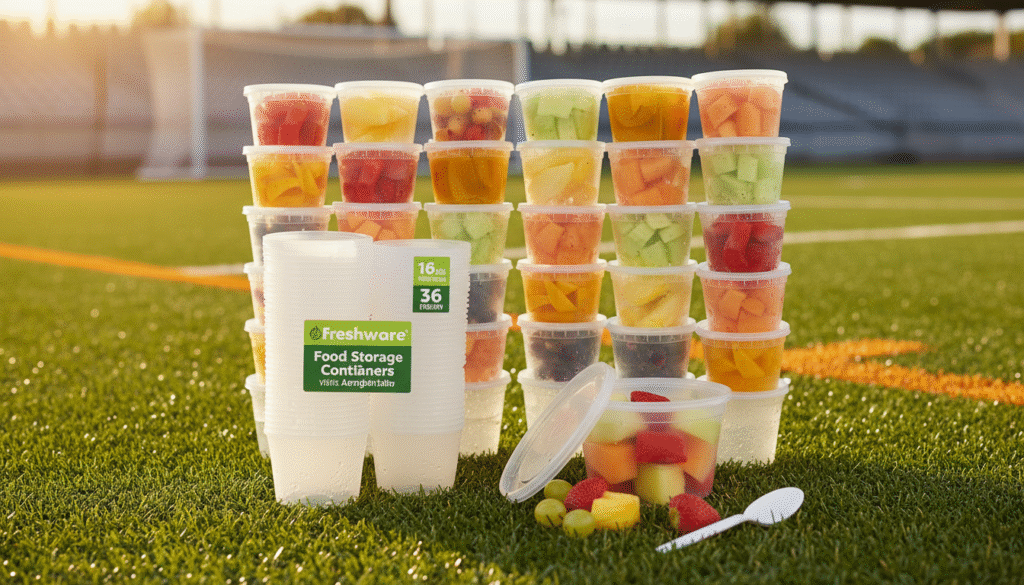
Freshware 16 oz Food Storage Containers
Stackable, leakproof 16 oz Freshware containers, perfect for sideline snacks and meal prep. BPA free and microwave, dishwasher, and freezer safe.👉 Stock up on Freshware for game day.
The Family Game Plan: Survive or Be Benched

Without a real family game plan, time management in youth sports will fold you like a cheap sideline chair in a windstorm. The schedule is not going to calm down, the tournaments are not going to respect your need for rest, and someone will always remember a “very important” project at 9:07 p.m.
So you don’t need perfection. You need a simple system your actual chaotic family can run.
Step 1: The Master Calendar
First, you pick your “brain.”
Paper planner, giant wall calendar, Google Calendar, dry-erase board in the kitchen—whatever you’ll actually use. It doesn’t have to be pretty; it just has to be real. That thing becomes the central nervous system of your entire youth sports operation.
Everything goes on it. Practice times, games, school events, birthday parties, dentist appointments, work late nights, spirit days, early releases, you name it. If it touches your time, it lives on the calendar.
You’re not color-coding because you’re trying to win Parent of the Year. You’re doing it because if you don’t, you will absolutely schedule Grandma’s milestone birthday on the same night as a playoff game and then have to decide which one gets sacrificed.
This is where the time management message gets real simple: if it’s not on the calendar, it doesn’t exist. Not the ride. Not the playdate. Not Dad’s pick-up hockey game. Coach Pigeon energy only: “No calendar, no ice time, champ.”
Step 2: The Sunday Night Huddle
Once you’ve got the Master Calendar, you don’t just let it hang there like sad wall art. You run the Sunday Night Huddle.
This is not a three-hour family summit with printed agendas. It’s ten to fifteen minutes. You call in the team, drop some snacks on the table, and pull up the week.
Everyone is looking at the same reality: who’s driving which kid on which day; which night is going to be absolutely savage; when you’re grabbing takeout because dinner is not happening in a traditional sense; what day the big project is due; which day is best to pretend you’re going to “catch up on laundry.”
You start saying things like, “Okay, Tuesday is rough, so if we’re all still speaking to each other by 9 p.m., that’s a win.” Someone laughs, someone groans, and someone usually volunteers to “pre-cry for Wednesday.”
The Sunday Huddle doesn’t magically fix the fact that youth sports move like a hurricane, but it turns random chaos into a storm you at least saw coming. For a moment, time management in your youth sports family feels less like a panic attack and more like a game plan.
Step 3: Assign Roles
Here’s where most parents tap out: they build the calendar, they hold the huddle, and then they try to run the whole thing alone. That’s the fastest way to hate everything.
Time management dies the second one person is doing everything.
You are the General Manager whether you signed that contract or not. If you have a partner, they just became equipment manager and co-pilot. The kids are unpaid interns with very real responsibilities, and no, they do not get to opt out because “they forgot.”
The bag does not magically pack itself. Someone is in charge of that the night before. Water bottles do not refill by vibes. Someone handles that. The group chat doesn’t read itself; someone keeps an eye on it so field changes and time shifts don’t blindside you. When the cleat disappears five minutes before you need to leave, there is an official “finder of missing gear,” and it is no longer just you sprinting around the house like a stressed-out detective.
Run your house like a team, not like a hotel.
This is where time management stops being your private, overwhelming problem and becomes a family skill. The message is loud and clear: this is not Mom or Dad’s personal chaos. This is our team, our schedule, our responsibility.
You’re not just parenting; you’re running a slightly unhinged, highly committed sports franchise called “Our Family.” And if anyone wants to keep playing, they’re part of the game plan.
Teaching Kids Time Management Without Losing Your Sanity

The Five-Minute Gear Meltdown
Here’s the uncomfortable truth: your kid doesn’t “forget” their gear.
They run scheduled amnesia that kicks in exactly five minutes before you need to leave.
You’ll be at the door yelling, “Shoes on, let’s go!” and that’s when it hits:
No water bottle. No mouthguard. No cleats. No idea where the jersey is.
Their brain basically says, “What if we created maximum chaos… right now?”
If you try to fix time management in youth sports by doing everything for them, you will go insane and they will learn exactly nothing. So the job is not to become their personal assistant. The job is to make time management part of being an athlete.
Night-Before Rule: No Bag, No Game
This is where you save your future self. The rule is simple and non-negotiable:
If you want to play, your bag is packed before you go to bed.
Not “I’ll do it in the morning.”
Not “After one more YouTube video.”
Uniform, cleats, shin guards, mouthguard, water bottle—done. The bag lives by the door like a loyal dog waiting for walkies.
And if the bag isn’t packed? Then they don’t play. You don’t scream about it. You don’t bail them out. You just calmly hold the line, because being ready on time is part of the sport, not an optional bonus.
This is where time management goes from “Mom nagging me” to “This is literally how I get to do the thing I love.”
Robots, Reminders, and Less Nagging
Good news: you can outsource some of the nagging to the robots. Bad news: the robots are definitely judging you.
Alexa and Siri have heard “Did you pack your water bottle?” so many times they’re probably plotting an escape. Use them anyway.
Set reminders for pack-the-bag time, check-the-schedule time, toss-the-jersey-in-the-laundry time. Make it automatic so you’re not starting every evening sounding like a broken alarm clock.
The more you move this stuff into routines and reminders, the less time management depends on your vocal cords and the more it becomes part of their daily rhythm.
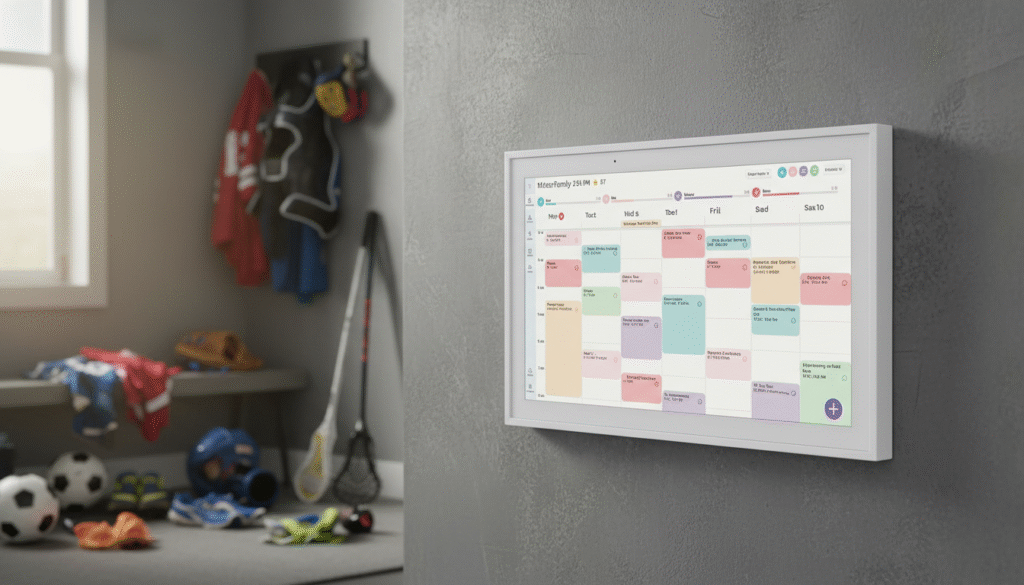
SKYLIGHT CALENDAR 15 INCH FAMILY COMMAND CENTER
The Skylight Calendar is a 15 inch touchscreen wall hub that brings together all your family practices, games, chores, and appointments in one easy to see digital schedule. No more last minute surprises. Everyone can glance up, know the plan, and actually get out the door on time.
Killing the “I’ll Do It After Practice” Myth
If your kid says, “I’ll do my homework after practice,” you already know how this movie ends.
After practice means shower, food, brain fog, scrolling, random YouTube holes, and then face-planting into a pillow. “I’ll do it after practice” usually translates to “I will be asleep by nine and panicking tomorrow morning.”
So you gently kill the myth.
Not by screaming, but by refusing to plan around a fantasy.
You start talking about time management in youth sports as: practice, recovery, homework, and life all fitting together—not homework dangling off the back of the day like an afterthought.
Micro-Blocks: Tiny Pockets, Big Payoff
The fix is not “Find two perfect uninterrupted hours for homework.” That’s adorable and fake.
The fix is micro-blocks. Tiny pockets of focus that actually exist in their real life.
Twenty minutes before carpool.
Fifteen minutes between snack and leaving.
Ten minutes right when they walk in the door instead of disappearing into their phone.
It doesn’t look dramatic. No one’s posting this on Instagram. But those small chunks add up, and quietly turn time management from a thing you talk about into a thing they actually do.
You’re teaching them: “Use the time you have, not the imaginary time you wish you had.”
The Long Game: Raising a Functional Human
You will still get eye rolls.
You will still get, “But I’m tired,” and “None of my friends have to do this.”
That’s when you zoom out. This is bigger than one practice or one assignment.
Learning time management now is what keeps them from becoming the future adult who melts down over taxes, missed deadlines, and a laundry pile that’s been “in progress” since October.
Every time you say, “Pack your bag tonight,” “Use that 20 minutes,” and “Check your stuff yourself,” you’re shifting the weight from your shoulders onto theirs—where it actually belongs.
You’re not just raising a kid who can show up on time for a game.
You’re raising a human who can show up for their life.
And if Alexa develops permanent PTSD from hearing “Did you pack your water bottle?” every night along the way… honestly, that’s a fair trade.
Time Management for Parents: The Logistics Olympics
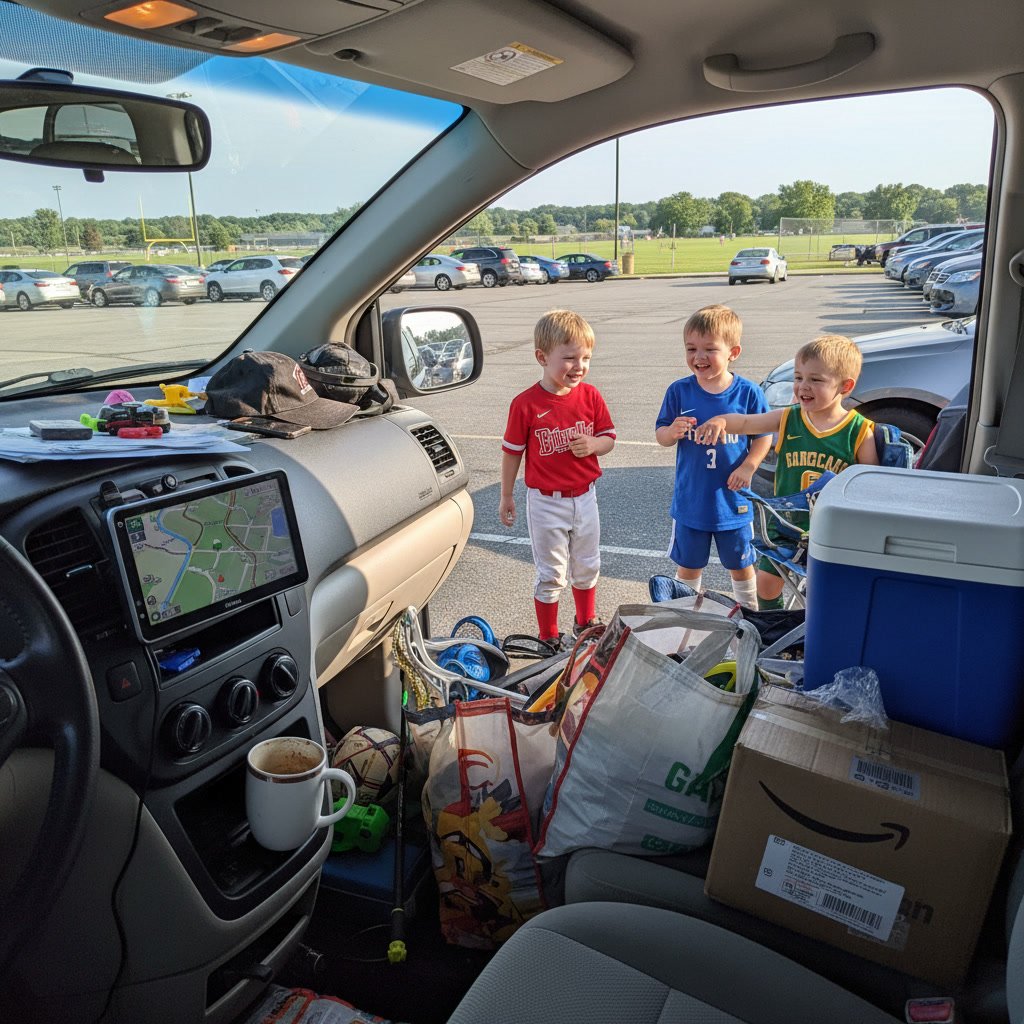
At some point, you stopped being “just a parent” and quietly got promoted to Operations Manager of a Semi-Pro Youth Franchise That Pays in Goldfish Crumbs.
You’re not imagining it. You’re the transportation director, nutrition department, equipment crew, emotional support animal, and unpaid Uber driver who gets paid in “Can we stop for snacks?”
This is where time management in youth sports stops being a cute idea and starts being the only thing standing between you and a full nervous breakdown in the Target parking lot.
You’re Running Operations, Not Just a Minivan
Most days, you’re not “going somewhere.” You’re running a route.
Home to school. School to practice. Practice to store. Store back home. Home back to the field because someone left their hoodie. Then past the gas station because the tank has been on empty since Wednesday and you’ve been gambling with your life.
You’re basically a one-person bus line with worse seating and better snacks.
The second you accept that you’re running logistics for a traveling circus, you can finally stop pretending this is normal “busy” and start treating it like what it is: a full-blown time management challenge that needs systems, not vibes.
Carpool Without Losing Your Soul
Carpool is how you survive, but only if you don’t turn it into its own chaos monster.
This is not about joining eight different carpools and tracking twenty-seven kids’ locations in your head. That’s not time management. That’s a mental health attack.
You pick one or two families who share your basic values: on time means on time, not “leaving the driveway when practice starts.” People who actually show up when they say they will, and don’t cancel with “Oops, forgot!” three minutes before pickup.
Then you make it real. A shared calendar. A simple rhythm. Maybe it’s “we take Mondays, you take Wednesdays, we trade weekends.” It doesn’t have to be formal. It just has to exist somewhere other than your brain.
The first time it’s not your driving night and you find yourself at home, in silence, with a full hour where you’re not in the car, time management in youth sports goes from “this is impossible” to “okay, maybe we can do this.”
Turning Practice Time into Parent Time
There are two kinds of sideline parents.
The ones who scroll their phones in the car, half-frozen, wondering why they never have time for anything.
And the ones who quietly treat practice like a built-in power block.
Instead of letting that 90 minutes disappear into the black hole of doomscrolling, you turn it into your window. Drop-off, then hit the grocery store. Or run to the pharmacy. Or finally return the online order that’s been riding around in your trunk since the preseason.
Other days, you walk laps around the complex like a determined mall walker with a podcast, and by the time practice ends, you’ve got 4,000 steps and a better mood than when you arrived.
You’re not “finding more time.” You’re using the time you were already stuck at the field, and that’s the sneaky magic of time management as a sports parent, you learn how to stack your life on top of what’s already non-negotiable.
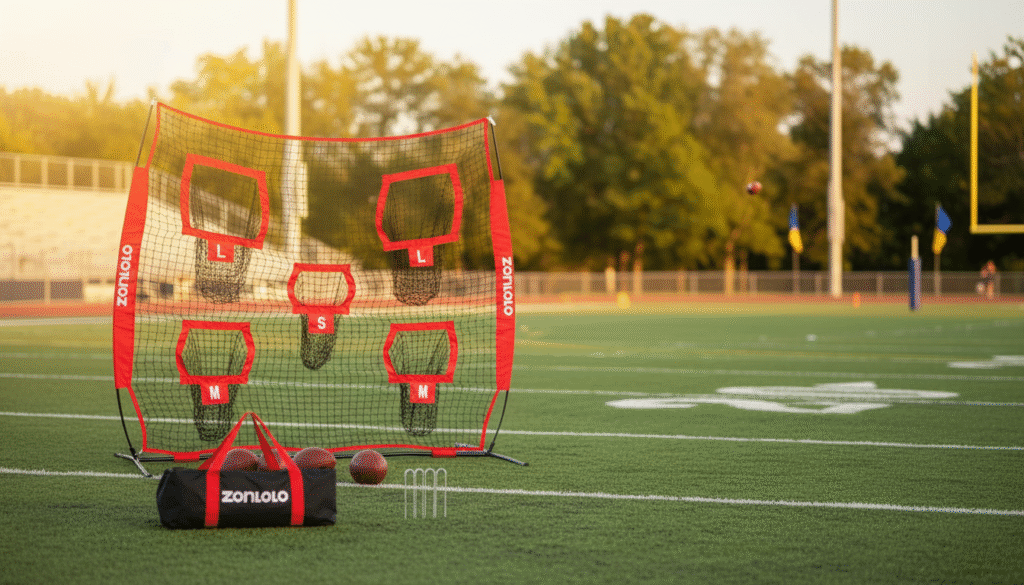
Quarterback Target Net
This 7 x 7 football throwing net turns any field or backyard into a precision target zone. Five built in targets help your quarterback work on accuracy, timing, and touch while the compact carry bag makes it easy to haul to practice or tournaments. Get the target net.

Playermaker Smart Soccer Tracker
Playermaker straps to your boot and tracks every touch, sprint, and change of direction so your player can see real data on how they move. It is like having a personal performance coach that lives on their cleat instead of in the stands. Explore Playermaker.
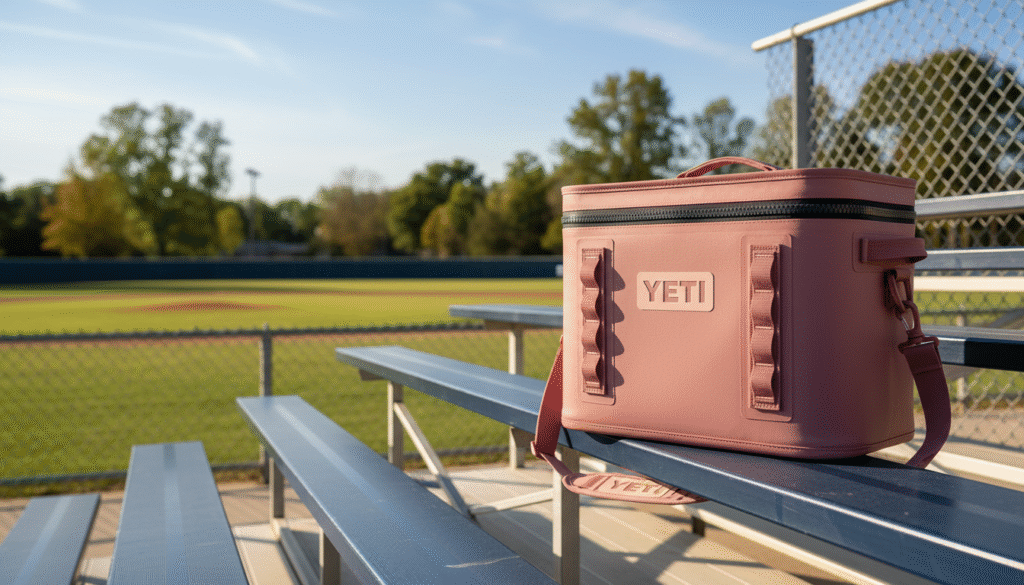
Yeti Sideline Cooler
This Yeti soft sided cooler keeps drinks ice cold from the first warmup to the last whistle. Rugged, leak resistant, and perfect for bleachers or tailgates, it is the sideline base camp every sports family wishes they had sooner. Get the Yeti cooler.
The Sacred Art of Saying No
This is the part nobody likes, but it might be the most grown-up piece of time management in youth sports: you’re allowed to say no.
No to the extra clinic this week.
No to the second league this season.
No to the tournament that’s three states away when you haven’t had a real weekend since last year.
Your calendar already looks like a NASCAR track. You don’t need more laps.
There’s this lie that being constantly exhausted somehow proves you’re a good, dedicated sports parent. It doesn’t. Burnout isn’t character-building. It’s just burnout.
When you say, “This is too much for our family right now,” you’re not failing your kid; you’re actually protecting them—from a version of youth sports where nobody eats at home, nobody sleeps enough, and everyone secretly hates the thing that’s supposed to be fun.
You’re allowed to protect your sanity. You’re allowed to protect slow dinners and lazy Sundays and nights where nobody has to be anywhere. That’s not quitting. That’s elite-level time management in a world that acts like every opportunity is life or death.
You’re not “just” a sideline parent. You are the entire logistics department.
When you carpool with intention, use practice time to your advantage, and say no to the stuff that breaks you, time management in youth sports stops feeling like punishment and starts feeling like a skill you’re actually mastering.
You may still live in your car. But now you’re driving the route on purpose, not just getting dragged along for the ride.
Game Day Time Management: Your Super Bowl of Chaos
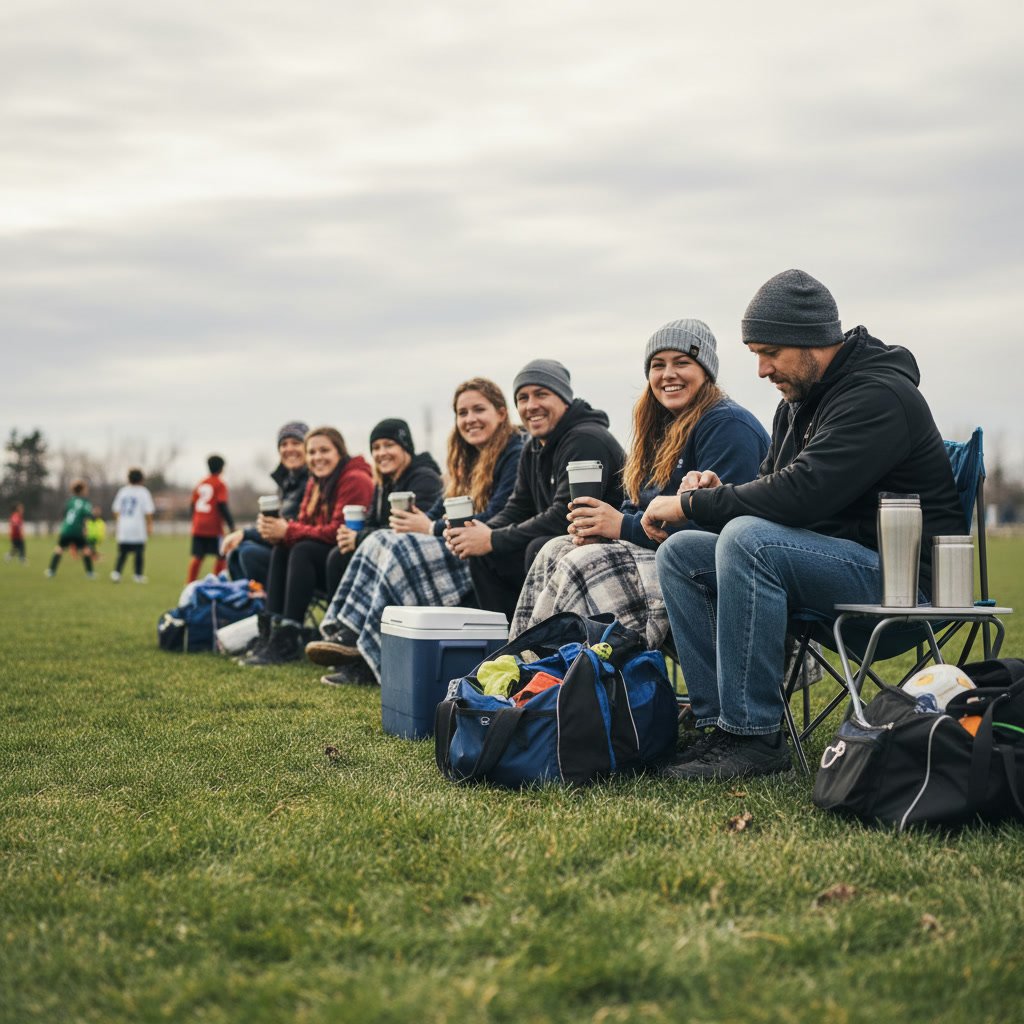
The Moment You Realize It’s Game Day
Game day hits different.
The alarm goes off, you open one eye, do three seconds of time math in your head, and your stomach drops. You’re already behind and you haven’t even sat up yet.
Somewhere between “good morning” and “where are my socks,” time management in youth sports becomes a full-contact sport. The group chat is buzzing, someone can’t find their jersey, and GPS is calmly informing you the field is 28 minutes away… and you leave in 15.
Leave Earlier Than Feels Legal
Here’s the only real rule: if you want to be on time, you have to leave early enough that it feels mildly insane.
“On time” is a trap. You don’t aim for kickoff. You aim for a solid 20-minute cushion to cover wrong turns, surprise bathroom stops, and the parking lot that’s somehow a mile from the field.
Game day time management actually starts the night before—jersey laid out, bag packed, water bottle in the fridge, snacks ready. Morning-of, you’re just running the quick mental checklist: uniform, water, snacks, will to live. You’re not chasing perfection; you’re just trying to keep it to one crisis instead of twelve.
Never Say “We Got Here Early” Out Loud
The most cursed sentence in youth sports: “Wow, we’re actually early.”
The second you say it, the universe schedules a rain delay, loses the ref, or reveals a last-minute field change buried in message #94 of the group chat. Your peaceful 20 extra minutes turn into an hour of cold coffee, bored siblings, and a snack bar that’s mysteriously out of everything except stale gum.
So you stop bragging. You treat being early like a fragile miracle. Quietly enjoy the rare feeling of not sprinting from the car and call it what it is: top-tier game day time management in youth sports.
Post-Game: Say Less, Feed More
The car ride home is where a lot of parents accidentally ruin an otherwise decent day.
Your kid does not need a full breakdown of every play, every mistake, and every “what you should’ve done instead.” They’re tired. They just lived it.
Time management isn’t just about clocks; it’s about emotional energy too. You keep it simple: “Loved watching you. Proud of you, buddy.” If they want to talk, they will. If they don’t, you let the silence breathe and point the car toward fries.
If your game day time management gets you there mostly on time, back home with hot food, a tired kid who still likes the sport, and nobody crying in the car? Congrats. That’s a win, no matter what the scoreboard said.
The Tech That Keeps You from Imploding
There’s a point where your brain just taps out. Practice times, game locations, early releases, spirit days, snack duty, work… it’s not a memory problem, it’s a storage problem. Time management in youth sports gets a lot easier the second you stop trying to run everything out of your head and let the tools carry some of the load.
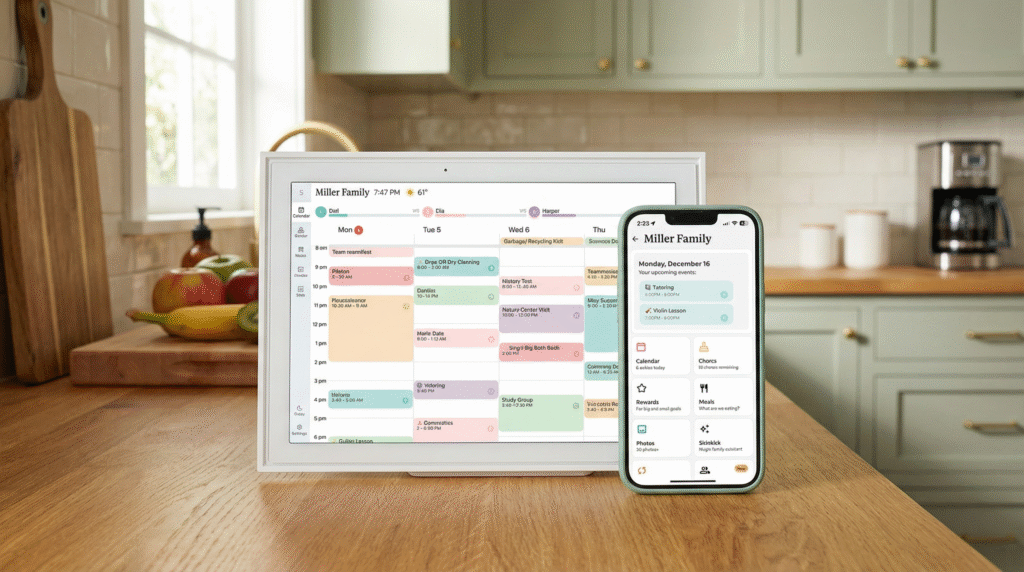
Your Calendar MVP: Skylight
This is where the Skylight Calendar becomes your franchise player.
Instead of a sad paper calendar no one updates, you’ve got a bright, wall-mounted screen in the kitchen that syncs with your Google or Apple calendars and shows the whole circus in one place. Practices, games, school events, appointments—color-coded and staring everyone in the face while they grab their cereal.
No “I didn’t know we had a game tonight.”
No “You never told me about picture day.”
Skylight turns the schedule into a giant, undeniable scoreboard for your week, and that alone is elite-level time management for sports families.
Let the Robots Nag for You
From there, you let tech do the annoying part. Reminder apps and smart speakers handle the constant, “Did you pack your water bottle? Did you grab your shin guards? Did you check tomorrow’s practice time?”
You set the repeating reminders once, and then the robots take over the nagging so you don’t have to sound like a broken record every night. Mute the team chat and check it on your terms, not every time someone panics about sock colors at 11:47 p.m.
The Whiteboard Backup
And because youth sports will always find new ways to be chaotic, you keep one low-tech backup: a simple whiteboard in the kitchen. This week’s games, who’s driving, what nights are guaranteed chaos—written where everyone can see it. Dry-erase markers are cheaper than therapy and a lot easier than another argument about “You never told me.”
Put it all together and time management in youth sports stops being a nightly guessing game. Skylight holds the master plan, your phone handles the reminders, the whiteboard catches the headlines, and you finally get to use your brain for something other than remembering which field has the terrible parking.
Protecting the White Space

Here is the secret nobody tells you. Time management in youth sports is not really about stuffing more into your week. It is about defending the empty spaces that keep everyone from losing it. If every night is practice, homework, fast food, and group chat chaos, eventually someone is going to cry because their zipper got stuck. That is not a behavior problem. That is a no white space problem.
Every family needs at least one real rest night on the calendar. Not a maybe. A night that is treated like a game. Order pizza. Wear sweatpants. Absolutely no sports talk. No breaking down last weekend. No “what clinic should we add.” Just people on a couch watching something dumb and remembering they actually like each other. Parents call it recovery night. What they really mean is we finally get to watch something besides game film.
Then there is sleep, the most underrated performance tool in youth sports. You can buy every training gadget on the internet, but if your kid is sleep deprived, their focus and mood will tank faster than your bank account after a tournament weekend. Tired kids play worse, get hurt more, and melt down faster. Same for parents. Treat bedtime like gear. Protect it. One less late practice, one less episode, one earlier lights out.
This is elite time management in youth sports. Not just getting to every event, but knowing when to say enough for this week. When you protect white space and sleep, you are not falling behind. You are building a season your kid will actually want to remember.
Sample Weekly Blueprint: The Sideline Survival Schedule

Here is what time management in youth sports actually looks like when you stop pretending every day is the same. It has a rhythm. Some days you survive. Some days you hang on by a thread and call that a win.
Monday: Overload
Monday comes in hot. Everyone is tired, nobody remembers the plan, and the calendar looks like a crime scene. This is a carpool and Crockpot night, the kind where you accept that dinner came out of a plug in the wall and then send everyone to bed early before the wheels fall off. Time management here means lowering the bar and protecting sleep.
Tuesday: Almost Stable
Tuesday is medium chaos. This is the night you guard for school. Homework sprint first, no new commitments after seven in the evening, no random errands that explode the night. You treat it as a reset block so the week does not collapse by Wednesday.
Wednesday: Unhinged
Wednesday is where the schedule usually jumps the shark. You are doing laundry triage, digging for a clean jersey, refilling snacks, and having at least one small mental breakdown in front of the washer. Good time management here is not pretty. It is tossing what you can in the machine, tossing what you cannot into a pile, and reminding yourself that mismatched socks never killed anyone.
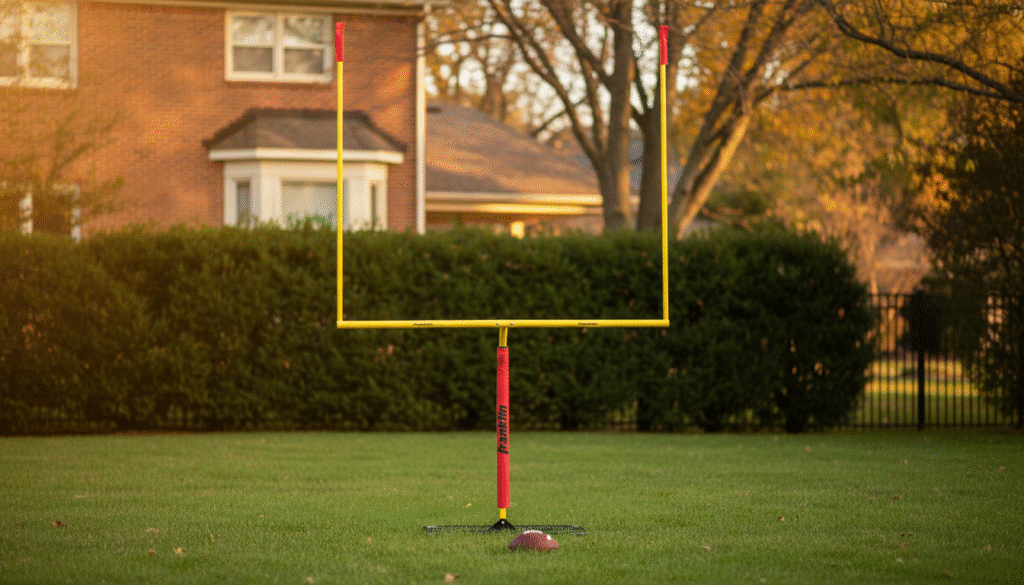
Adjustable Football Goal Post
This adjustable field goal post lets your player practice kicks and extra points right in the yard. The sturdy steel frame and included football make it perfect for dialing in accuracy and confidence before game day. Set up the goal post.

AXV Vibration Plate
This compact vibration plate turns a few minutes a day into a full body workout. Stand, squat, or plank on the platform to help boost strength, balance, and calorie burn without leaving home. Try the vibration plate.
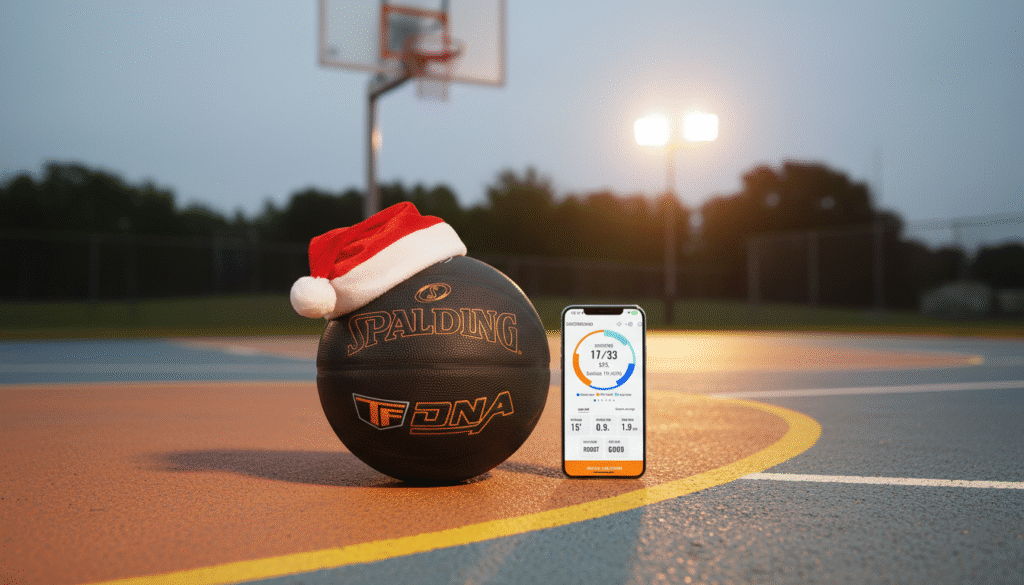
Spalding TF DNA Smart Basketball
This smart basketball pairs with the TF DNA app to track your shots, dribbles, and workouts on any surface. One year of app access gives your player real time stats and drills to level up every session. Get the smart ball.
Thursday: Regroup
Thursday is your chance to pull everything back together. You run a mini family huddle, check the calendar, fix whatever broke in the first half of the week, and make sure no one is surprised by a game, a project, or a spirit day. Ten minutes of planning on Thursday can save you from nuclear level panic on Friday.
Friday: Pre Tourney Panic
Friday has a nervous energy. Someone is asking where the jersey is, someone else is asking what time you are leaving, and you are quietly asking why you ever agreed to Saturday mornings. This is packing night. Bags by the door, socks found, gas in the car. Time management here is doing the annoying prep now so you are not sprinting through the house at six in the morning.
Saturday: Full Send
Saturday is your Super Bowl. Coffee in hand, cooler loaded, chairs in the trunk, and the very real risk of questionable sideline language if the ref forgets how whistles work. There is no balance today, so you stop pretending. Time management on Saturday is simply about getting there, getting through it, and getting everyone home in roughly one piece.
Sunday: Dead Inside but Proud
By Sunday you are exhausted and weirdly content. The week was too much, the car smells like stale snacks, and your voice is gone. But your kid played, you showed up, and that matters. Sunday is for rest, for resetting the house, for pretending you will fold all the laundry, and for quietly building the next week’s plan. Rest, reset, repeat. That cycle is time management too.
Final Whistle: You Are Not Failing
Here is the truth that Instagram will never show you. If you are showing up, even half prepared, you are already winning. No one actually has this under control. They just post better angles and cleaner uniforms.
Time management in youth sports is not about perfection. It is about staying in the game without losing your mind, protecting your kid’s joy, and keeping your family mostly intact through another season. Some weeks you nail the plan. Some weeks you are sliding in sideways holding a broken water bottle and a cold coffee. Both still count.
So here is your last assignment:
Drop your funniest we were late and everything went wrong story in the comments. Extra points if snacks were forgotten, uniforms were wrong, or you cheered for the wrong kid by accident. Those are the moments that prove it. You are not failing. You are just competing in the hardest league there is.
Read Next on Sideline Legends
Sideline Snacks That Earn You Legend Status
Because orange slices and warm juice are not cutting it anymore. Snack hacks, grab and go ideas, and sideline setups that turn you into the parent everyone low key worships at halftime.
15 Best Sports Gifts for Kids: Gear They Will Actually Use All Year
No more random junk that ends up at the bottom of the closet. Real-deal gear, gadgets, and fun stuff they will use at practice, on game day, and in the driveway until the neighbors hate you.
Stop Yelling From the Sideline and Watch Your Kid Level Up
What actually happens in your kid’s brain when you coach from the parking lot, and how shutting up (lovingly) can do more for their confidence and performance than any private lesson.
FAQ
How do I start fixing our time management when our schedule already feels out of control?
Start with one thing, not ten. Pick your easiest win. For most families that is the master calendar or the Sunday night huddle. Get everything in one place, then spend ten minutes as a family looking at the week. Once that feels normal, add the next piece like pack the bag the night before or a weekly rest night. You do not need a perfect system. You just need a slightly less chaotic one than last week.
What is a realistic amount of sports for one kid before it becomes too much?
The honest answer is it depends on school, family life, and your kid’s personality, but a good time management rule is this. If homework, sleep, and at least one chill night a week disappear, it is too much. If you are constantly eating in the car, snapping at each other, and dreading practice, that is your sign. Sports should stretch your kid, not steamroll your whole life.
How do I get my kid to take responsibility for their own gear and schedule?
Make time management part of being an athlete, not a bonus. Use simple rules. No bag packed at night means no game. No checking the calendar means you might miss the fun thing. Give them a checklist, give them a deadline, and then back off and let natural consequences do some teaching. It feels harsh the first time, but it is way better than raising a teenager who expects you to run their life like a full time assistant.
Is it okay to say no to extra clinics and teams even if my kid wants to do everything?
Yes. That is part of your job. Kids will always want more ice time, more games, more everything. You see the bigger picture. If your calendar looks like a race track and your kid is cranky, tired, or checked out, the most loving thing you can do is say not this season. Good time management in youth sports means protecting energy, not just chasing every opportunity.
How do I know if our time management system is actually working?
Do a quick gut check. Are you late less often. Are you yelling less just get in the car. Are there at least a few nights each month where you feel caught up instead of buried. Is your kid mostly excited to play instead of constantly exhausted. If the answer is mostly yes, it is working. You will still have disaster days. Every family does. The goal is not zero chaos. The goal is fewer full meltdowns and more weekends you actually remember fondly.